
Shockwave Therapy for Plantar Fasciitis and Stubborn Tendon Pain: A Guide for San Fernando Valley Runners, Lifters and Weekend Athletes
If you've had heel pain for months, an Achilles that complains every time you pick up the pace, or an elbow that flares up after every tennis or pickleball session, you've probably already tried the usual list: rest, stretching, new shoes, massage, maybe a brace. Sometimes that's enough. Often it isn't, and the pain settles into a frustrating pattern of good weeks and bad weeks that never fully resolves.
That's the situation where a lot of people start searching for shockwave therapy. This guide explains how radial shockwave therapy is used for plantar fasciitis and other stubborn tendon and soft tissue pain, what the research generally says, who it tends to suit, and how to fit it into a realistic plan. Biohack Cryo & Wellness now offers radial shockwave therapy at our Woodland Hills studio, and this article is written for the runners, lifters, hikers and weekend athletes across the San Fernando Valley who are tired of working around the same injury.
Why tendon and heel pain gets "stuck"
Tendons and thick connective tissue like the plantar fascia are strong, but they don't have a rich blood supply. When they're overloaded repeatedly, from a jump in running mileage, a new training program, long hours on hard floors or a change in footwear, small areas of irritation can develop faster than the tissue can recover.
In the early stages, rest and sensible load management often sort things out. But when the irritation lingers for months, the tissue can get stuck in a loop: the area stays sensitive, you move differently to protect it, surrounding muscles tighten, circulation to the area stays limited, and the pain keeps returning whenever you load it.
That's why so many long-standing heel and tendon problems don't respond to rest alone. Rest takes away the aggravation, but it doesn't always restart the recovery process. Shockwave therapy is designed to address exactly that part of the problem.
How radial shockwave therapy works on tendon pain
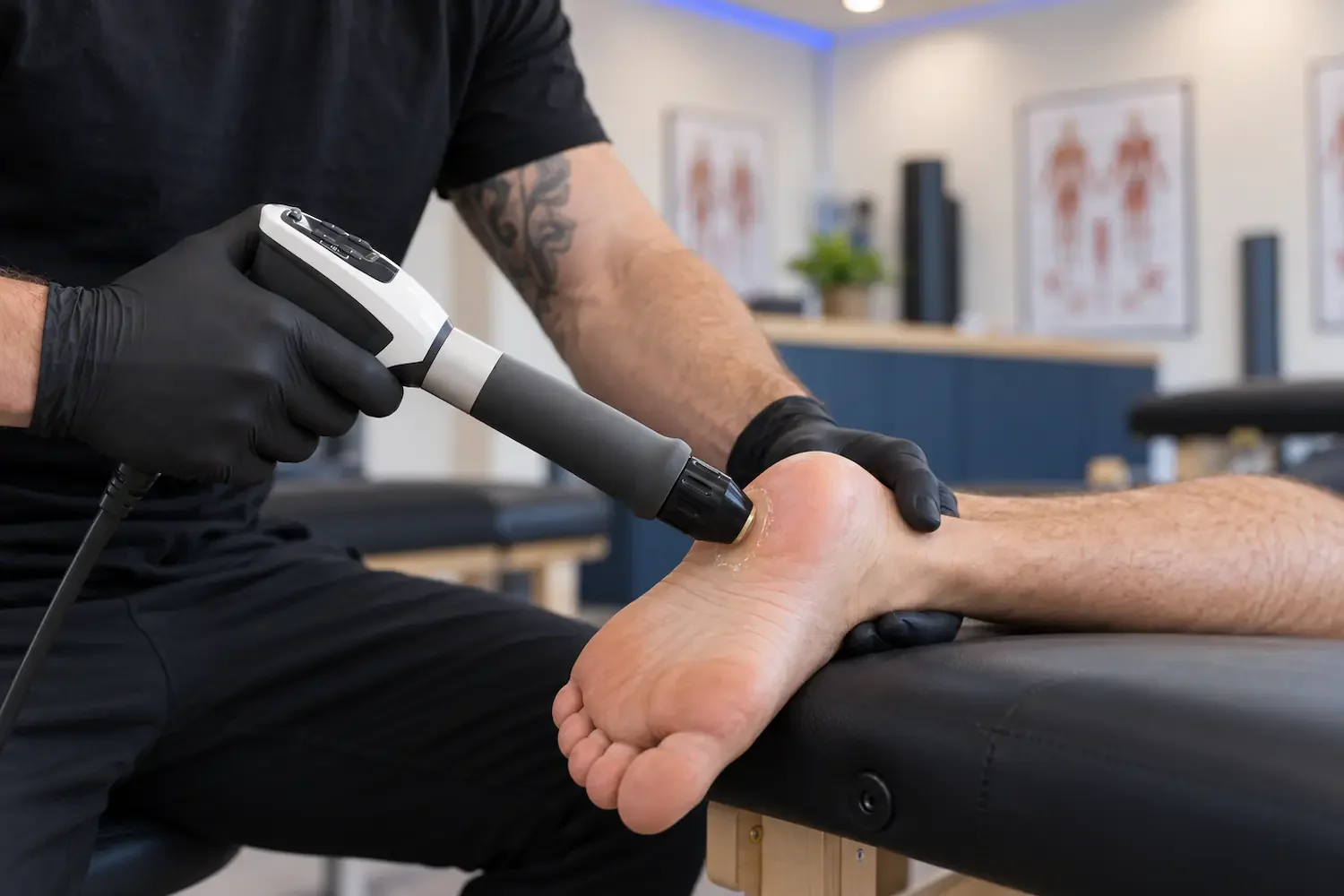
Radial shockwave therapy delivers rapid pulses of acoustic energy into the tissue through a handheld applicator. The energy spreads outward from the applicator tip into the area underneath, which is why it's called radial.
The pulses are designed to stimulate local blood flow and trigger the body's natural repair response in the targeted area. Many people also notice a reduction in sensitivity in the treated spot, which can make it easier to get back to movement and strengthening.
It's non-invasive, meaning no needles and no injections, and the treatment itself takes only a few minutes per area. Most people follow a short series of sessions about a week apart rather than relying on a single visit.
If you want a step-by-step walkthrough of a session, including what it feels like and how to handle aftercare, read our guide on what to expect from radial shockwave therapy.
What the research generally says
Shockwave therapy isn't new. It has been studied for decades for chronic tendon and soft tissue problems, and it's widely used by physical therapists, sports medicine providers and orthopedic practices. In the US, the FDA has approved certain shockwave devices for chronic plantar fasciitis, and the treatment has been researched for issues like Achilles tendinopathy, lateral elbow pain (often called tennis elbow) and calcific shoulder problems.
Results vary from person to person, and shockwave works best as part of a broader plan that includes sensible training, strengthening and load management. It isn't a magic switch, and anyone promising instant, guaranteed results is overselling it. But for people whose pain has lingered despite doing the basics, it's a well-established, non-invasive option worth knowing about.
Common areas people seek shockwave therapy for
Heel pain and plantar fasciitis
Plantar fasciitis is the name most people know for pain along the bottom of the heel, often worst in the first few steps out of bed or after sitting for a while. It's extremely common in runners, walkers, people who spend long days on their feet and anyone who has recently increased their activity.
Heel pain is also one of the most common reasons people look into shockwave therapy. The plantar fascia is thick, relatively close to the surface in the heel area and prone to exactly the kind of stubborn, long-lasting irritation that shockwave is designed for.
A useful marker to track: how your heel feels in your first ten steps in the morning. If that's slowly improving across a series of sessions, you're moving in the right direction.
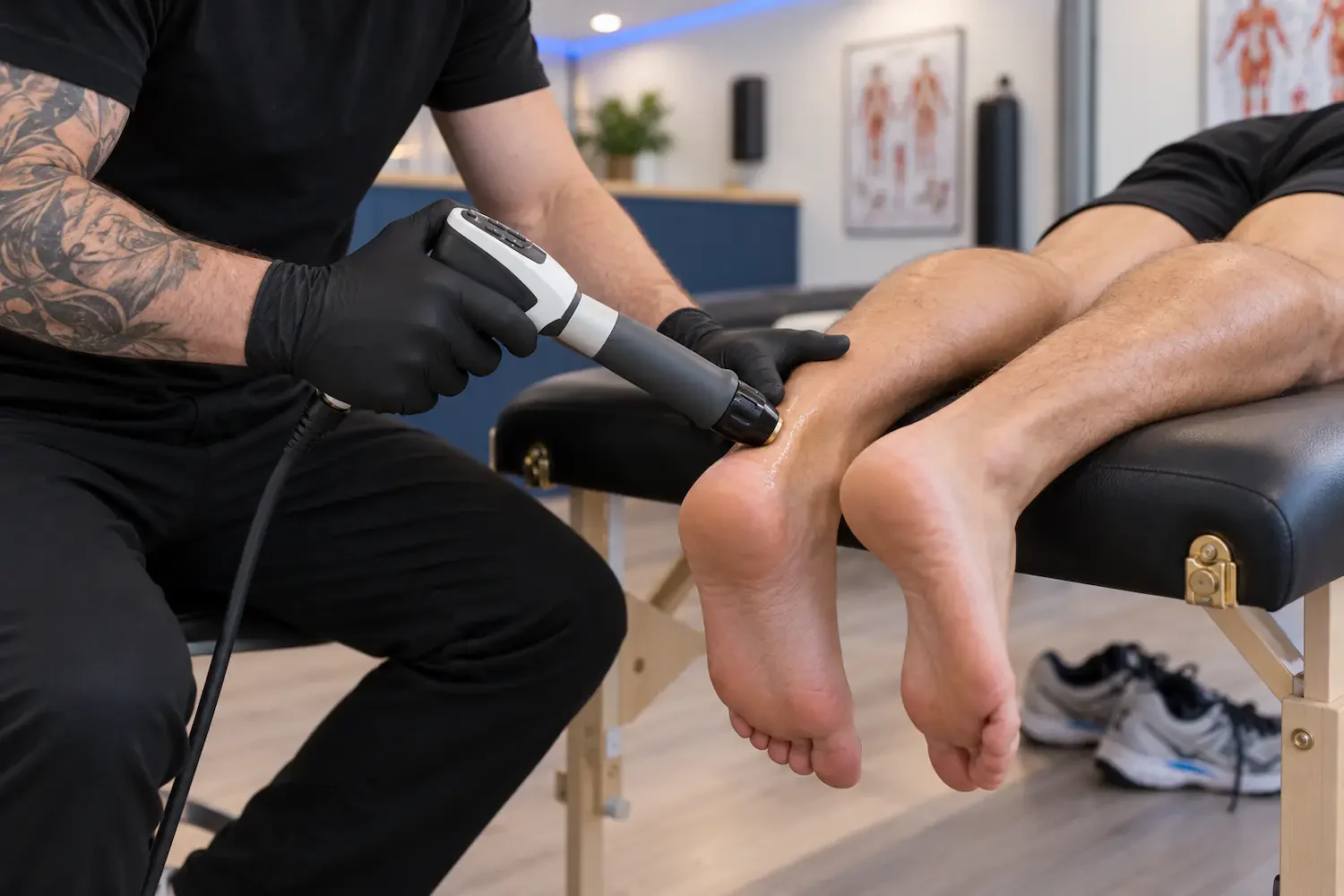
Achilles tendon pain
Achilles pain usually shows up at the back of the ankle, either in the middle of the tendon or right where it attaches to the heel bone. It's common in runners, especially after increases in speed work or hill training, and in people who play court sports.
Achilles issues are notorious for hanging around, partly because the tendon is loaded with almost every step. Shockwave is often used alongside a progressive calf strengthening program for this reason.
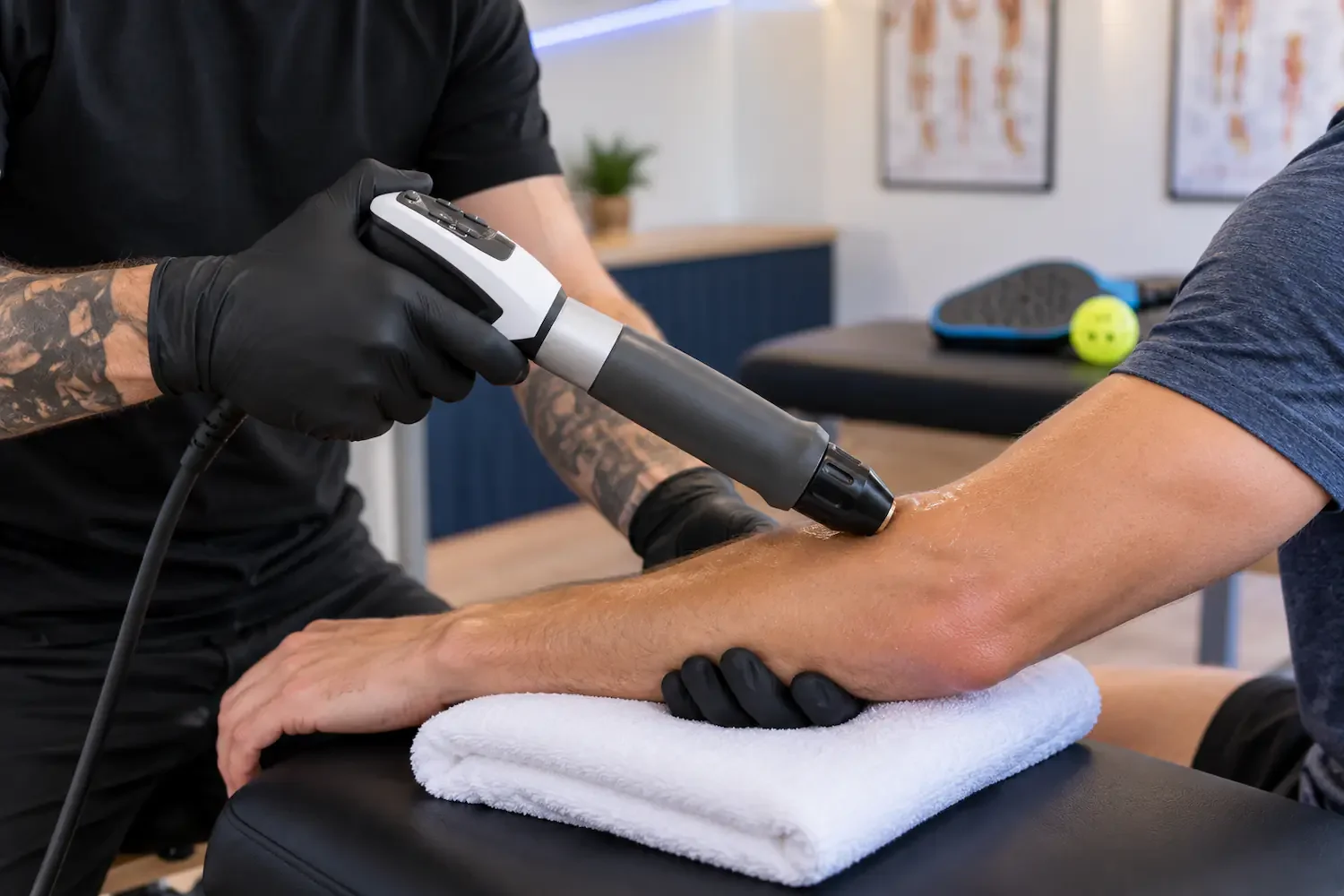
Tennis elbow and golfer's elbow
Pain on the outer side of the elbow (tennis elbow) or the inner side (golfer's elbow) is common in racquet sports, golf, lifting, and jobs that involve repetitive gripping. With pickleball growing fast across the Valley, elbow pain is becoming more and more common.
These tendons are close to the surface, which makes them a natural fit for radial shockwave.
Shoulder pain
Shoulder irritation from overhead lifting, swimming, throwing or long hours at a desk can be persistent. Shockwave is used for some tendon-related shoulder pain and for tight trigger points in the muscles around the shoulder blade and upper back.
Hip, knee and shin pain
Runners and hikers often deal with pain on the outside of the hip, around the kneecap tendon, or along the shin. These are other areas where radial shockwave is commonly used, often together with hands-on work on the surrounding muscles.
Trigger points and muscle knots
Not every problem is a tendon. Plenty of people have a stubborn knot in the calf, glute, upper back or neck that massage relieves for a day or two before it tightens right back up. Radial shockwave can be used on these trigger points to help loosen tension that keeps returning.
Is shockwave therapy right for you?
Shockwave tends to be a good fit if:
• Your pain has been around for a while. Typically at least several weeks to months, rather than a fresh injury from yesterday.
• You've already tried the basics. Rest, stretching, better shoes or massage helped a bit but didn't solve it.
• The pain is in a specific, identifiable area. A heel, a tendon, a spot on the elbow, a knot you can put your finger on.
• You want a non-invasive option. No needles, no injections, no downtime.
• You're willing to commit to a short series. Shockwave works over several sessions, not one.
It's not the right choice for everyone. Shockwave is typically avoided during pregnancy, over areas with infection, tumors, implants or recent steroid injections, for people with blood clotting disorders or on blood thinners, and for anyone under 18. If you've had a sudden injury, significant swelling, numbness, or pain you can't explain, see a doctor first to rule out anything that needs medical care. And if you're already working with a physician or physical therapist, let them know you're considering shockwave.
Shockwave therapy vs. other options
People searching for shockwave are usually weighing it against a few other approaches. Here's how they generally compare.
Rest and stretching
Rest reduces aggravation, and stretching can ease tightness. Both are sensible first steps and should stay part of your plan. Where they sometimes fall short is with long-standing problems, where the tissue needs a stronger stimulus to restart recovery.
Massage and myofascial release
Hands-on work like myofascial release addresses tight fascia and muscle around the painful area, which is often part of the picture. Shockwave is more targeted: it focuses a strong stimulus on one specific spot in a few minutes. The two work well together. Many clients use myofascial release for the calf, arch and hamstrings, and shockwave for the specific heel or tendon spot.
Injections and more invasive procedures
Some people with persistent tendon pain are offered injections or other medical procedures. Those decisions belong with your doctor. What shockwave offers is a non-invasive option that many people like to try first or alongside medical care, with no needles and no downtime.
Doing nothing and waiting
Some tendon and heel problems do eventually settle on their own, but it can take a long time, and many people end up changing or stopping the activities they enjoy in the meantime. If your pain is already affecting your training, work or sleep, a proactive plan usually makes more sense than waiting.
A realistic plan for heel and tendon pain
The people who get the most out of shockwave tend to combine it with a few simple habits:
1. Commit to the series. Most protocols use roughly three to five sessions about a week apart. Put them in your calendar before you start.
2. Manage your load, don't eliminate it. Complete rest often isn't the goal. Reduce the activities that clearly aggravate the pain, and keep moving in ways that don't.
3. Add strength work. For heel and Achilles pain in particular, progressive calf and foot strengthening is one of the most commonly recommended long-term strategies. A physical therapist or coach can help you build a program.
4. Follow the aftercare. Skip ice and anti-inflammatories on the treated area after a session, and avoid strenuous or pain-provoking activity for about 48 hours.
5. Track one simple marker. Morning heel pain, the number of minutes into a run before your Achilles complains, or how your elbow feels after a match. Look for the trend over weeks, not day-to-day changes.
6. Look after the rest of your recovery. Sleep, stress and general recovery all affect how tissue heals. On days you're not getting shockwave, services like Normatec compression, contrast therapy or hyperbaric oxygen therapy can support your overall recovery. Keep cold exposure away from the treated area for the first 48 hours after a session.
Everyday habits that help heel pain settle
Shockwave is one part of the picture. What you do for the other 23 hours of the day matters just as much, especially with heel and Achilles pain. These are the habits that come up most often:
Pay attention to your footwear. Very flat, worn-out or unsupportive shoes can make heel pain worse, particularly if you spend long days on your feet. Many people find a supportive, cushioned shoe for daily wear helps, and runners often benefit from checking the mileage on their running shoes.
Avoid going barefoot on hard floors for long periods. A lot of Valley homes have tile or hardwood floors. If your heel is sore, a supportive pair of house shoes or sandals can make a noticeable difference, especially first thing in the morning.
Warm up before those first morning steps. Gentle ankle circles, toe curls and a light calf stretch before getting out of bed can take the edge off that first-step pain.
Increase training gradually. Many heel and tendon problems start with a sudden jump: a new program, extra miles, more hills, a switch to minimalist shoes, or a burst of pickleball after months off. When you're returning to activity, build up gradually.
Look at the whole chain. Tight calves, hamstrings and hips often go hand in hand with heel and Achilles pain. This is where myofascial release and regular mobility work can support what shockwave is doing at the specific painful spot.
Keep your weight-bearing days in mind. If you have a long day on your feet coming up, that's a good day to be gentle with other activity.
When heel pain might be something else
Not all heel pain is plantar fasciitis, and not all tendon pain is simple overuse. It's worth seeing a doctor before starting shockwave, or any treatment, if you notice any of the following:
• Pain that started suddenly with a pop or a specific injury, especially at the back of the ankle.
• Significant swelling, bruising or warmth in the area.
• Numbness, tingling or burning in the foot or hand.
• Pain at night or at rest that doesn't ease with changes in position.
• Pain in both heels with no obvious cause, or pain along with fever or feeling unwell.
• Difficulty putting weight on the foot at all.
These signs don't necessarily mean something serious, but they do mean it's worth getting a proper assessment first. Shockwave works best when you know what you're dealing with.
Choosing a shockwave provider in the San Fernando Valley
Search for shockwave therapy near Woodland Hills and you'll see a mix of results, including chiropractors, physical therapy clinics, orthopedic practices and plenty of men's health clinics, which offer a different kind of shockwave altogether. A few questions help you compare options:
• Is it radial or focused shockwave? Both are used for musculoskeletal pain. Radial is well suited to more superficial tendons, the plantar fascia and trigger points.
• Is it for musculoskeletal pain? Make sure the provider is offering shockwave for muscles, tendons and soft tissue, not a different application.
• How is the session structured? Look for a provider who asks about your history, locates the treatment area carefully and adjusts intensity to your comfort.
• What else is available? If you want to combine shockwave with hands-on work, compression or general recovery, a studio with everything under one roof saves time.
• Is it convenient enough to stick with? A series of weekly sessions only works if you actually make it to all of them. A location near home or work matters.
For clients in Woodland Hills, Calabasas, West Hills, Tarzana and Encino, Biohack's location on Topanga Canyon Boulevard makes weekly sessions easy to fit in.
What a session at Biohack looks like
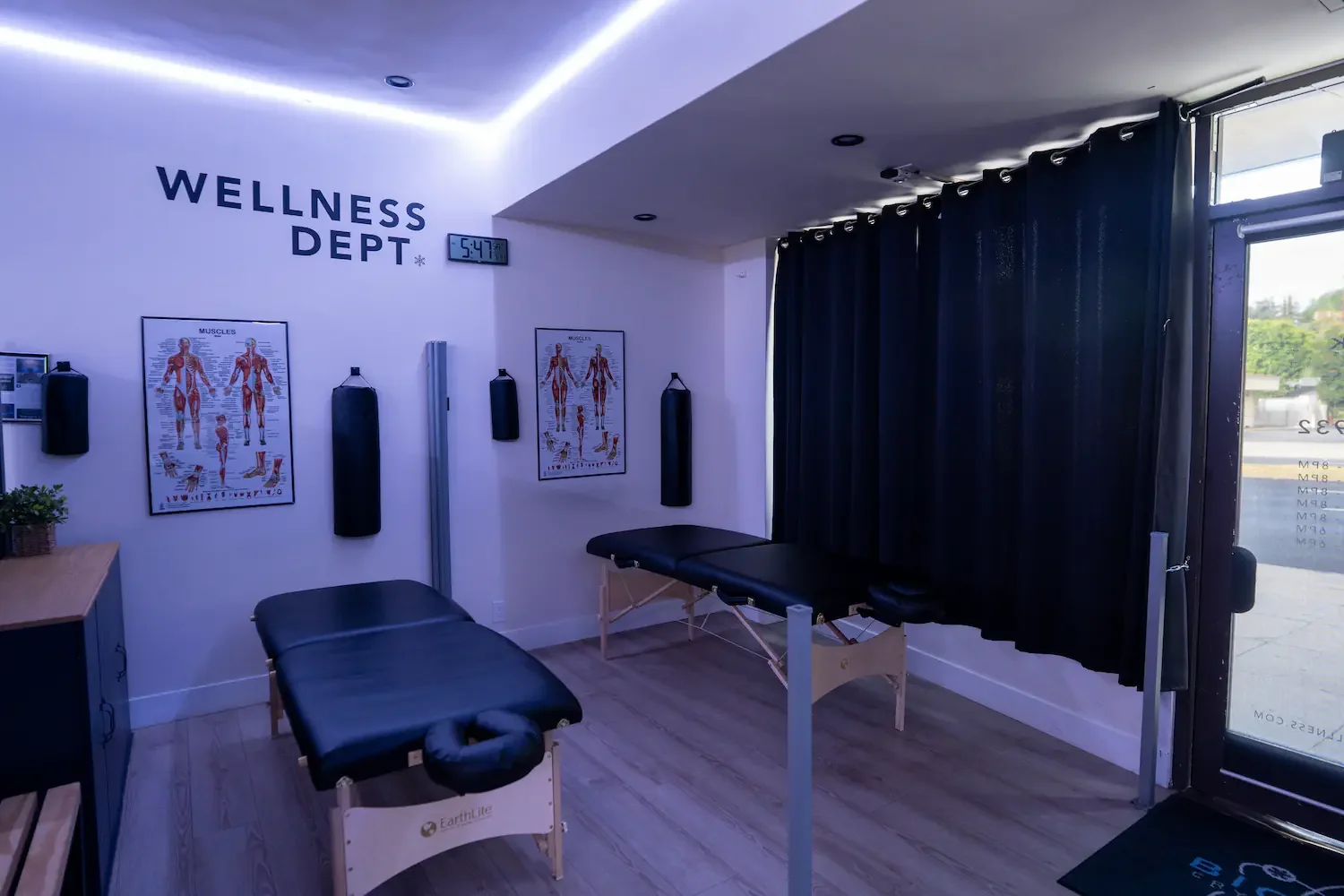
At Biohack, each session starts with a quick conversation about where you feel pain, how long it's been there and what makes it worse. Your practitioner locates the most tender spots, applies a thin layer of gel and starts the device at a lower setting. You'll feel a rapid, firm tapping, which can be intense over the sorest spots, and intensity is always adjusted to your comfort.
The treatment itself takes just a few minutes per area. Afterward, you can go straight back to your day. Mild soreness or redness for a day or two is normal.
For the full step-by-step breakdown, including what to wear and how to prepare, see what to expect from radial shockwave therapy.
Why a recovery studio instead of a clinic?
Shockwave is offered in a range of places around the Valley, including chiropractic offices, physical therapy clinics and orthopedic practices. Those are the right places if you need a diagnosis, imaging or a medical treatment plan.
A recovery studio like Biohack fits a different need. It's a good option if you already know what's bothering you, you want a non-invasive way to support recovery, and you'd like to fit it into a broader routine without a referral or a long wait for an appointment. Because we're a full recovery studio, you can also combine shockwave with myofascial release, compression, cryotherapy, infrared sauna, cold plunge and the Ammortal Chamber under one roof.
Serving runners and athletes across the San Fernando Valley
Biohack Cryo & Wellness is at 5305 Topanga Canyon Blvd in Woodland Hills, close to the 101 and easy to reach via Ventura Boulevard and Topanga Canyon Boulevard. We regularly welcome clients from Calabasas, West Hills, Tarzana, Encino, Canoga Park, Sherman Oaks and Thousand Oaks, and radial shockwave is a natural fit for the runners, hikers, lifters, tennis and pickleball players, and people whose jobs keep them on their feet all day.
If heel, tendon or trigger point pain has been holding you back, book your first session on the radial shockwave therapy page. Planning to make recovery a regular habit? See our memberships and packages.
Frequently asked questions
Does shockwave therapy work for plantar fasciitis?
Shockwave therapy has been studied for chronic plantar fasciitis for many years, and the FDA has approved certain shockwave devices for this use. Results vary, and it tends to work best as part of a plan that includes load management and strengthening.
How many shockwave sessions do I need for heel or tendon pain?
Most protocols use roughly three to five sessions spaced about a week apart. Long-standing problems may need a few more. Your practitioner will suggest a plan after your first visit.
Can shockwave therapy help tennis elbow?
Radial shockwave is commonly used for outer and inner elbow tendon pain, which is often linked to racquet sports, golf, lifting and repetitive gripping.
Is shockwave therapy good for Achilles pain?
Shockwave is often used for long-standing Achilles tendon pain, usually alongside a progressive calf strengthening program.
Does shockwave therapy hurt?
It can feel intense over the most tender spots, with a rapid tapping sensation. It shouldn't be unbearable, and intensity is adjusted to your comfort throughout the session.
Can I keep running during shockwave therapy?
Often, yes, with sensible adjustments. Avoid strenuous or pain-provoking activity for about 48 hours after each session, and reduce the training that clearly aggravates your pain.
Who should not get shockwave therapy?
It's typically avoided during pregnancy, over areas with infection, tumors, implants or recent steroid injections, for people with blood clotting disorders or on blood thinners, and for anyone under 18. Check with your healthcare provider if you have a medical condition.
Is shockwave therapy covered by insurance?
Most commercial health insurance plans don't cover shockwave therapy. Whether HSA or FSA funds can be used depends on your plan, so check with your plan administrator.
Where can I get shockwave therapy near Woodland Hills?
Biohack Cryo & Wellness offers radial shockwave therapy at 5305 Topanga Canyon Blvd in Woodland Hills, serving the San Fernando Valley.
Radial shockwave therapy at Biohack Cryo & Wellness is a wellness service and is not intended to diagnose, treat or cure any medical condition. Individual results vary.