
Myofascial Release in Woodland Hills: What a Session Actually Involves
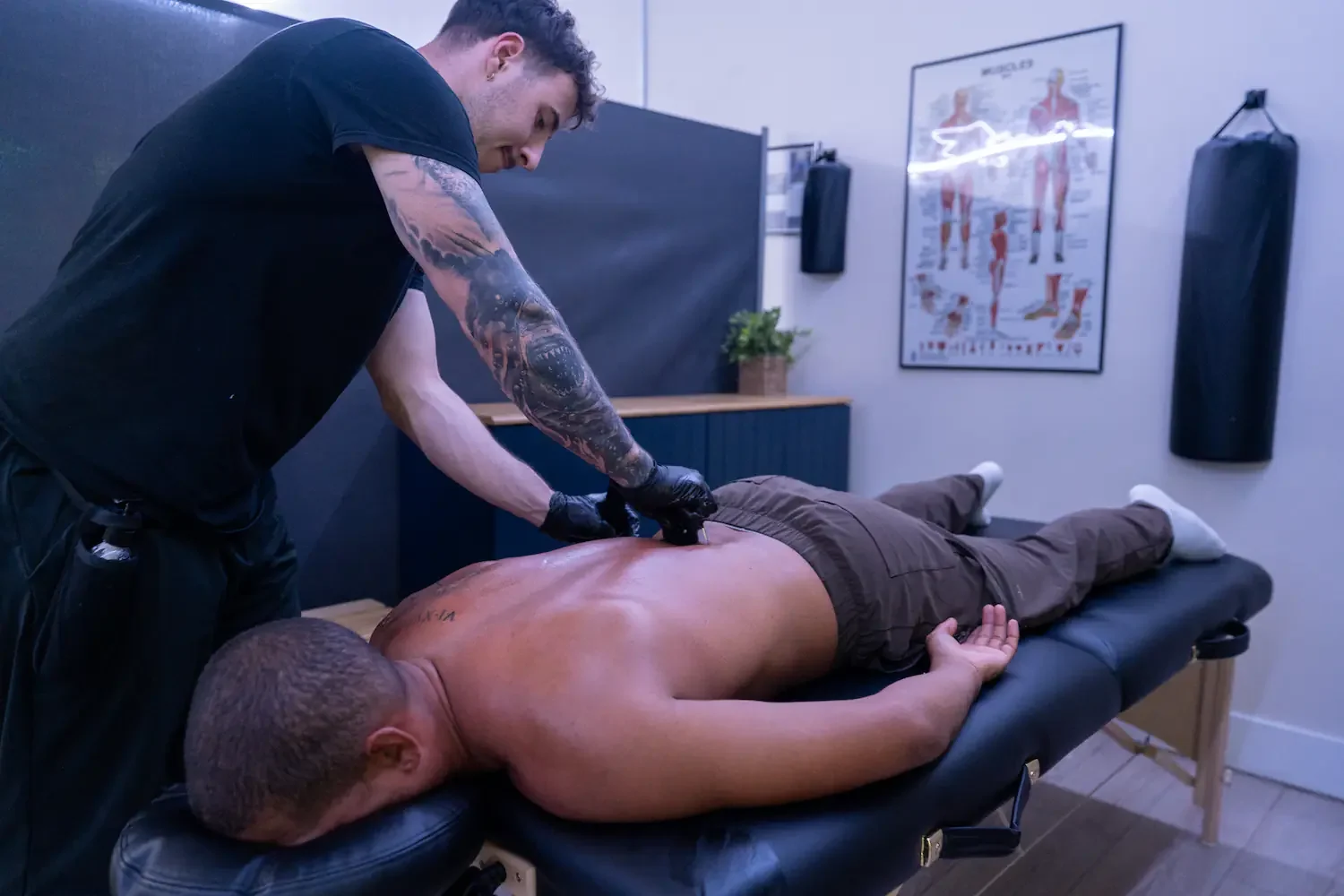
A myofascial release session at Biohack Cryo & Wellness is hands-on bodywork where a trained practitioner applies slow, sustained pressure to areas of restriction in your fascia — the connective tissue surrounding your muscles, bones, and organs — to help it soften, lengthen, and move more freely again. Sessions run 30, 60, or 90 minutes, you stay clothed throughout, and the pressure is introduced gradually based on how your body responds in real time.
If you've never booked one before, here's exactly what to expect from the moment you walk in.
Why "What Actually Happens" Is Worth Explaining Up Front
A lot of people put off booking myofascial release simply because they don't know what to expect, and uncertainty is a bigger barrier than the treatment itself. It's not an X-ray or a diagnostic procedure, it's not a medical intervention with recovery downtime, and it's not the kind of deep-tissue-massage-turned-uncomfortable-surprise some people worry about walking into. It's a structured, communicative, hands-on session where you're an active participant the entire time, not something being done to you passively. Knowing the actual steps ahead of time — which is the point of this guide — tends to make people far more comfortable booking a first session than reading a generic service description that just lists benefits without explaining the process.
Before Your Session
You'll arrive relaxed and in comfortable clothing — you remain clothed for the entire session, so there's no need to change or undress, which is one of the more common questions first-timers have going in. Your practitioner will ask about your specific areas of tightness, restriction, or ongoing discomfort, along with any relevant history — an old injury, a repetitive strain from work or training, or a chronic pattern like tension headaches or lower back tightness — so the session can be built around what's actually going on in your body rather than a generic routine.
Communication Throughout the Session
One of the more overlooked aspects of a good myofascial release session is how much it depends on real-time feedback between you and your practitioner. This isn't a passive treatment where you simply lie there while something is done to you — the practitioner is constantly reading how your tissue responds, and your input directly shapes what happens next. If an area feels too intense, saying so isn't interrupting the process; it's part of the process. If a spot that felt fine a minute ago suddenly feels sharp or different, that's worth mentioning immediately rather than waiting until after the session. Clients who communicate actively throughout tend to get more precisely targeted work than clients who stay quiet and simply endure whatever pressure is applied.
What Happens During the Session
Once the consultation is done, your practitioner begins applying slow, sustained pressure to the areas of restriction you discussed. This isn't a relaxation massage with broad, gliding strokes — myofascial release works on the deeper layers of fascia and muscle tissue, and the technique is deliberately slow. Pressure is introduced gradually and guided by ongoing communication between you and your practitioner about what you're feeling, so the intensity stays within what's productive rather than simply uncomfortable.
Some areas, especially long-standing restrictions, can feel intense while they're being worked on. That's a normal part of the process — the sensation should feel purposeful and controlled, not sharp or unbearable. Your practitioner will check in throughout and adjust pressure based on your feedback and how the tissue is responding.
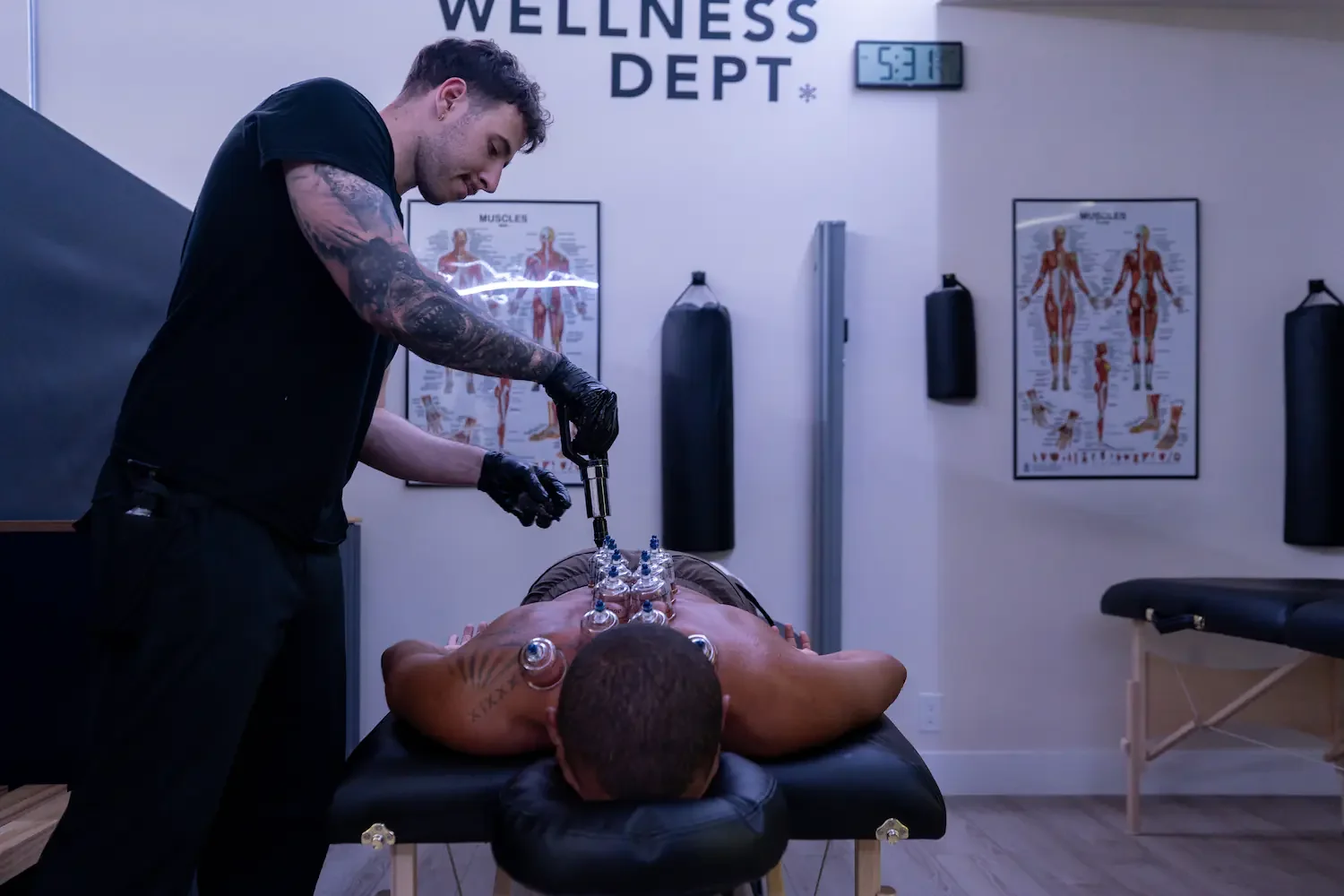
Depending on what you're dealing with, your session may also include cupping therapy or muscle scraping, which Biohack offers as add-on techniques when they're likely to help release tension more effectively than manual pressure alone. If you specifically want one of these techniques without a full myofascial release session, Biohack also offers a cupping-or-scraping-only session as its own booking option.
Session Length: 30, 60, or 90 Minutes
The right session length depends on how much ground needs to be covered and how many areas you're addressing. A 30-minute session is typically enough for a focused, single-area concern — one shoulder, one hip, a specific spot that's been bothering you. A 60-minute session allows for more thorough work across a couple of related areas, which is common for clients managing broader patterns like desk-related upper body tension. A 90-minute session is the most comprehensive option, giving a practitioner time to work multiple areas or go deeper on a longstanding, complex restriction — full-body tension patterns, a combination of old injury sites, or clients who simply want the most thorough session available.
If you're not sure which length is right for a first visit, the practitioner team can help you decide based on what you describe during booking or at check-in.
What It Feels Like
Because myofascial release targets restricted tissue directly rather than working broadly like a relaxation massage, it can involve real intensity in the areas being treated — but it should never cross into sharp, unbearable pain. The goal is productive discomfort that eases as the tissue softens during the session, not pain you're just enduring. Communication is a real part of the process: telling your practitioner when something is too intense, or when an area needs more attention, directly shapes how the session goes.
Areas Practitioners Commonly Work
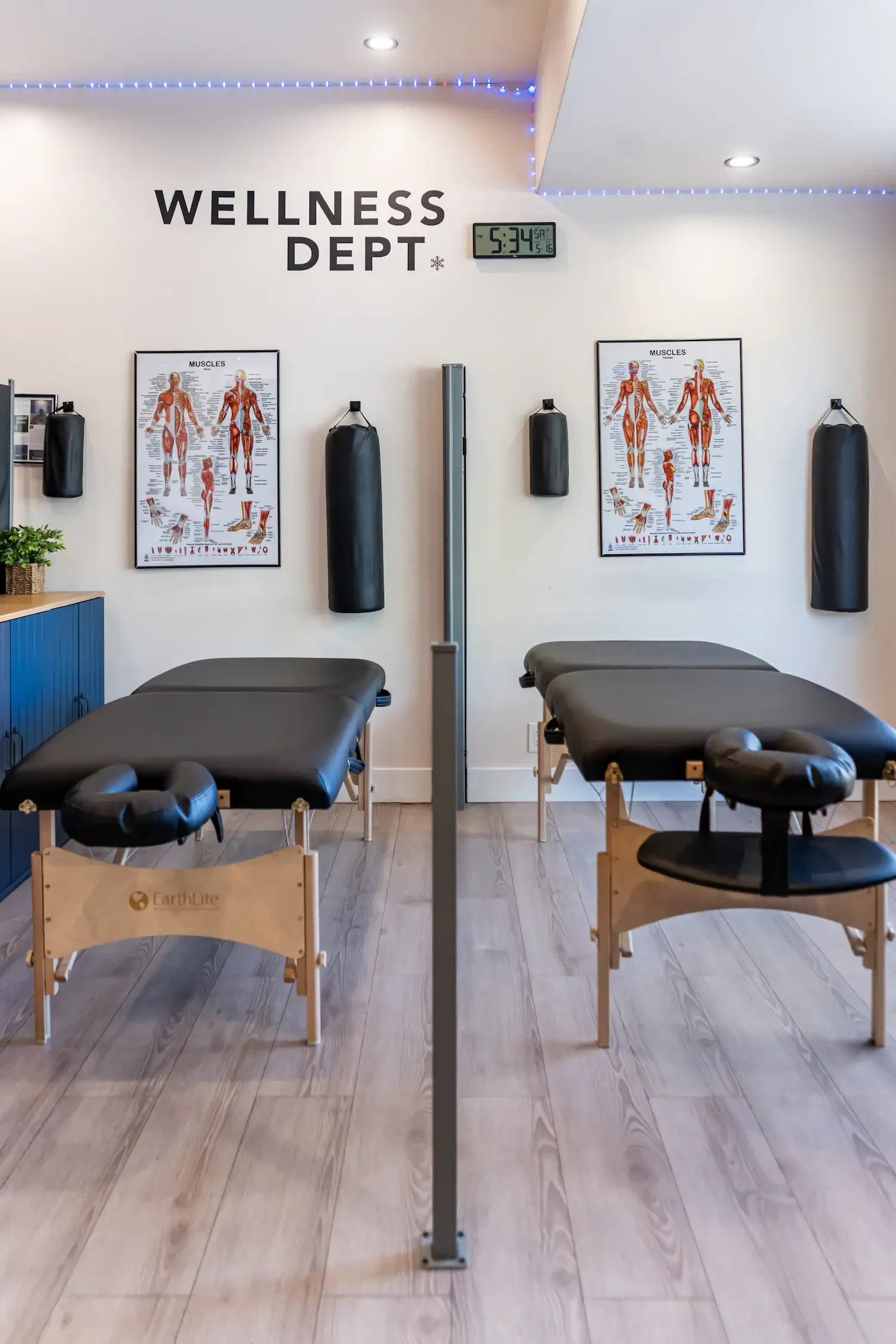
While every session is built around what you're actually dealing with, some areas come up more often than others. Neck and upper shoulder tension, often tied to desk work or phone posture, is one of the most common requests. Lower back and hip tightness — sometimes from sitting, sometimes from training — is another frequent area, along with IT band and outer hip restriction in runners and cyclists. Plantar fasciitis and lower leg tightness are common among clients who spend long hours on their feet or who run regularly. None of these are the only things myofascial release addresses, but if one of them sounds familiar, it's a reasonable starting point to bring up when you book.
Myofascial Release vs. a Deep Tissue Massage
It's a fair question, since the two can look similar from the outside — both involve firm, hands-on pressure. The real difference is in technique and goal. A deep tissue massage generally works muscle tissue with kneading, friction, and gliding strokes aimed at general tension relief and relaxation. Myofascial release works specifically on the fascia using slow, sustained, often stationary pressure held until the tissue itself softens and releases, which is a fundamentally different mechanism than working muscle fibers with movement-based strokes. The goal with myofascial release isn't relaxation for its own sake — it's addressing a specific structural restriction that's limiting movement or causing pain, which is why it's typically approached as results-driven bodywork rather than a spa treatment.
Who Myofascial Release Is For
Myofascial release tends to be the right fit for anyone dealing with chronic muscle tightness, stiffness, or ongoing discomfort that hasn't resolved with rest or stretching alone. That includes clients with limited range of motion or mobility restrictions from daily stress, posture, or overuse; people dealing with desk-related tension or repetitive strain; athletes and active individuals working through training-related tightness; and anyone recovering from injury or managing a recurring pain pattern who wants more targeted, hands-on work than a general massage provides.
After Your Session
Most clients leave feeling noticeably lighter, more mobile, and more balanced — not sore in the way an intense workout leaves you sore, but with a genuine sense that a restricted area has more room to move. Some areas that were significantly restricted may feel tender for a day or so afterward, similar to how a deep-tissue massage can leave residual sensitivity; staying hydrated and doing some light movement in the following day or two tends to help.
How to Choose Between 30, 60, and 90 Minutes for Your First Visit
If this is your first session and you're not sure which length to book, a useful rule of thumb: choose 30 minutes if you have one clearly defined problem area you want addressed directly, 60 minutes if you're dealing with a couple of related areas (like neck, shoulder, and upper back tension that all seem connected), and 90 minutes if you have a longstanding, more complex pattern — old injury sites, full-body tension, or you simply want the practitioner to have enough time to assess and work multiple regions without rushing. Booking shorter than you actually need is the more common mistake; if you're unsure, going slightly longer on a first visit gives your practitioner room to identify things you may not have mentioned.
How Many Sessions You'll Actually Need
A single session can meaningfully ease an area of tightness, but a restriction that's been building for months usually isn't fully resolved in one visit. For a chronic issue, consistent weekly or biweekly sessions in the first few weeks tend to produce more durable results than occasional, spaced-out visits, with many clients shifting to monthly maintenance once the primary restriction has eased. Your practitioner can give you a more specific sense of what to expect after assessing the area during your first session.
What to Tell Your Practitioner Before You Start
The more specific you can be during your intake conversation, the more targeted your session will be. Rather than just saying "my back is tight," it helps to mention when it started, whether it's tied to a specific activity (a new workout routine, a long stretch of desk work, a recent move or physical task), whether the discomfort is constant or comes and goes, and whether you've tried anything else for it already — stretching, foam rolling, a massage that didn't fully resolve it. None of this is required, and a good practitioner will ask the right follow-up questions regardless, but coming in with those details ready tends to make the first session more efficient and more accurately targeted.
Serving Woodland Hills and the Surrounding Valley
Biohack's location at 5305 Topanga Canyon Blvd puts it within easy reach of most of the West Valley, and myofascial release clients regularly come in from Calabasas, Tarzana, Encino, West Hills, and Sherman Oaks in addition to Woodland Hills itself. That matters for a service like this one specifically, because myofascial release tends to work best as a repeated routine rather than a single visit — a chronic restriction that took months to build usually needs more than one session to meaningfully resolve, which means the location needs to be one you can realistically get to on a weekly or biweekly basis. For clients along the Topanga Canyon Boulevard or Ventura Boulevard corridors, that's a short enough drive to support an actual routine rather than an occasional treat.
Pairing Myofascial Release With Other Recovery Services
While myofascial release stands well on its own, a meaningful number of clients pair it with another service in the same visit to address both the structural and circulatory sides of recovery. A common combination is myofascial release followed by Normatec compression, which extends the circulation benefit right after a session that's specifically targeted restricted tissue. Others pair it with infrared sauna time beforehand, using the heat to help soften tissue before hands-on work begins, which some practitioners find makes the myofascial release itself more effective. Athletes managing a training load sometimes rotate between myofascial release for structural, hands-on work and cryotherapy or the Ammortal Chamber for broader, whole-body recovery — different tools addressing different parts of the same overall goal. If you're not sure what combination makes sense for your specific situation, ask your practitioner during booking or at your first session; they can build a sequence around what you're actually dealing with.
Common Mistakes First-Timers Make Booking Myofascial Release
A few patterns come up often enough with first-time clients that they're worth flagging directly. The most common is under-booking session length — choosing 30 minutes because it sounds like plenty of time, then realizing partway through that there was more ground to cover than expected. The second is waiting for pain to become severe before booking at all, when earlier intervention on a mild, developing restriction is generally easier to resolve than waiting until it's a significant, longstanding pattern. The third is treating a single session as a complete fix for a chronic issue and then being surprised when the tightness returns within a couple of weeks — which is normal, and exactly why a short series of sessions tends to outperform a single one-off visit for anything that didn't develop overnight.
Myofascial Release for Desk Workers and Remote Employees
Given how much of the Valley's workforce now spends significant hours at a desk or working remotely, neck, shoulder, and upper back tension tied to posture has become one of the more common reasons clients book myofascial release in the first place. The pattern is familiar: rounded shoulders, a forward head position, and hours of minimal movement create fascial restrictions across the upper back and neck that stretching alone often doesn't fully resolve, because stretching addresses muscle length while myofascial release addresses the connective tissue itself. Clients dealing with this kind of desk-related tension often find that a 60-minute session focused on the neck, shoulders, and upper back, repeated every few weeks, does more for daily comfort than an occasional generic massage.
Myofascial Release for Athletes and Active Clients
Runners, cyclists, and clients doing regular strength training tend to develop fascial restrictions in fairly predictable places — the IT band and outer hip for runners, hip flexors and quads for cyclists, and shoulders or lats for anyone doing regular upper-body strength work. Because these restrictions develop gradually through repeated movement patterns, they often go unnoticed until they start limiting range of motion or contributing to a nagging, low-grade ache during activity. Active clients in Woodland Hills and the surrounding Valley often build myofascial release into a training cycle proactively — every few weeks during a heavier training block — rather than waiting until a restriction becomes uncomfortable enough to disrupt training entirely. Pairing a myofascial release session with Normatec compression afterward is a common combination for athletes specifically, since the compression extends the circulation benefit right after the hands-on work has addressed the underlying tissue restriction.
What Sets Biohack's Approach Apart
Not every myofascial release session is structured the same way, and it's worth knowing what to expect walking into Biohack specifically. Sessions are practitioner-led rather than following a fixed, generic protocol, which means the actual areas worked and the technique used are built around what you describe during intake rather than a standard routine applied to every client. The option to add cupping or muscle scraping when appropriate, rather than treating those as separate, disconnected services, means a single session can flex to whatever's likely to help most on a given day. And because Biohack is a broader recovery studio rather than a single-service provider, myofascial release clients have the option to layer in cryotherapy, the Ammortal Chamber, or infrared sauna and cold plunge as their routine evolves, without needing to find and vet a second or third provider elsewhere in the Valley.
Fitting Myofascial Release Into a Busy Valley Schedule
One of the more common reasons clients across Woodland Hills, Calabasas, and Encino put off booking myofascial release isn't skepticism — it's simply finding the time. Because sessions are offered in 30, 60, and 90-minute increments, it's realistic to fit even a shorter session into a lunch break or between other errands along Ventura Boulevard, rather than needing to clear out half a day. Clients balancing work and family commitments across the West Valley often find that a 30-minute session focused on one specific area is more sustainable to keep on a regular calendar than trying to schedule a longer 90-minute session that inevitably gets pushed back. Consistency, even in shorter increments, tends to produce better results over time than sporadic, longer sessions squeezed in only when something feels truly wrong.
Setting Realistic Expectations for Results
It's worth being honest about the pace of change rather than promising instant, permanent relief after one visit. A single myofascial release session can produce a genuinely noticeable improvement in range of motion and comfort that same day, which is part of why the service has such a strong word-of-mouth reputation among clients across Woodland Hills and the surrounding Valley. But a restriction that developed over months of desk work, training, or an old injury pattern didn't form overnight, and it typically doesn't fully resolve overnight either. Clients who see the most durable, lasting results tend to be the ones who commit to a short series of sessions up front — often weekly or biweekly for three to four visits — rather than expecting a single appointment to undo months of accumulated tension. Setting that expectation correctly from the start tends to lead to a much better overall experience than going in expecting a one-time fix.
A Note on Choosing the Right Practitioner Studio
Not every place offering "myofascial release" in the Valley delivers it the same way, and it's worth knowing what separates a genuinely results-driven session from a rebranded relaxation massage. Ask directly whether the practitioner is trained specifically in myofascial techniques, whether sessions are built around your stated concerns or follow a fixed routine regardless of client, and whether add-ons like cupping or scraping are available when appropriate rather than upsold regardless of need. These questions apply whether you're considering Biohack or comparing options across Woodland Hills, Calabasas, or Sherman Oaks — the label "myofascial release" on a menu doesn't guarantee the structured, communicative, practitioner-led approach described throughout this guide.
Booking a Myofascial Release Session in Woodland Hills
Biohack Cryo & Wellness is located at 5305 Topanga Canyon Blvd in Woodland Hills, serving clients throughout the San Fernando Valley, including Calabasas, Tarzana, Encino, West Hills, and Sherman Oaks. Myofascial release sessions can be booked directly online in 30, 60, or 90-minute lengths, or as a standalone cupping-or-scraping session.
Frequently Asked Questions
Do I stay clothed during a myofascial release session?
Yes. Unlike some other bodywork, myofascial release at Biohack is done fully clothed in comfortable attire — there's no need to undress or change beforehand.
Is myofascial release painful?
It can involve real intensity in areas of significant restriction, but it should never be sharp or unbearable. Practitioners work within your tolerance and adjust based on your feedback throughout the session.
How long does a session take?
Sessions run 30, 60, or 90 minutes depending on how many areas you're addressing and how much work is needed. A cupping-or-scraping-only session is also available as its own booking option.
What's the difference between myofascial release and a regular massage?
Myofascial release targets the deeper layers of fascia and muscle tissue with slow, sustained pressure, rather than the broader, gliding strokes used in a relaxation massage. It's results-driven bodywork, not a relaxation treatment.
Will I be sore after a myofascial release session?
Some areas that were significantly restricted may feel tender for a day or so, similar to a deep-tissue massage. Most clients feel lighter and more mobile overall rather than generally sore.
How often should I book myofascial release for a chronic issue?
Consistent weekly or biweekly sessions in the first few weeks tend to produce more durable results than infrequent visits, with many clients shifting to monthly maintenance once the initial restriction eases.
Do you offer cupping or scraping without a full myofascial release session?
Yes, a cupping-or-scraping-only session is available as its own booking option for clients who specifically want that technique.
What's the difference between myofascial release and a deep tissue massage?
Deep tissue massage generally uses kneading and gliding strokes aimed at general relaxation. Myofascial release uses slow, sustained, often stationary pressure specifically targeting fascial restrictions until the tissue softens — it's structural, results-driven bodywork rather than a relaxation treatment.
Which session length should I book for my first visit?
30 minutes works well for one clearly defined problem area, 60 minutes for a couple of related areas, and 90 minutes for a longstanding or more complex pattern. If you're unsure, booking slightly longer gives your practitioner room to work.