
Radial Shockwave Therapy in Woodland Hills: What to Expect Before, During and After Your First Session (Copy)
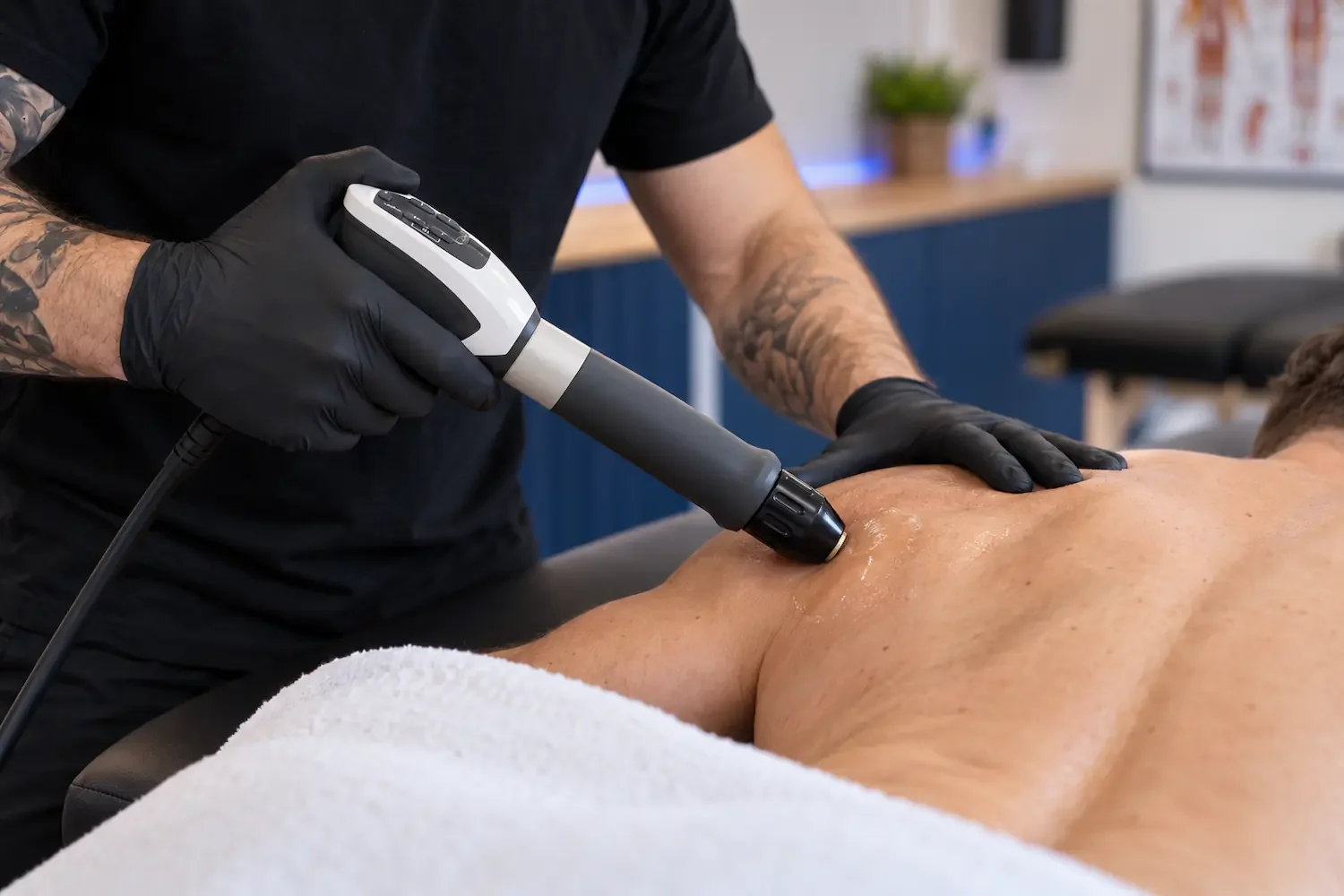
Radial shockwave therapy is now available at Biohack Cryo & Wellness in Woodland Hills, and if you've never tried it, you probably have the same questions most first-timers do. What does it actually feel like? Does it hurt? How long does it take, and how many sessions will you need before you notice a difference?
This guide walks through the whole experience from the moment you book to the days after your session, so you can walk in knowing exactly what's going to happen. If you want the short version first, the radial shockwave therapy service page covers the basics. This article goes deeper.
What radial shockwave therapy is, in plain language
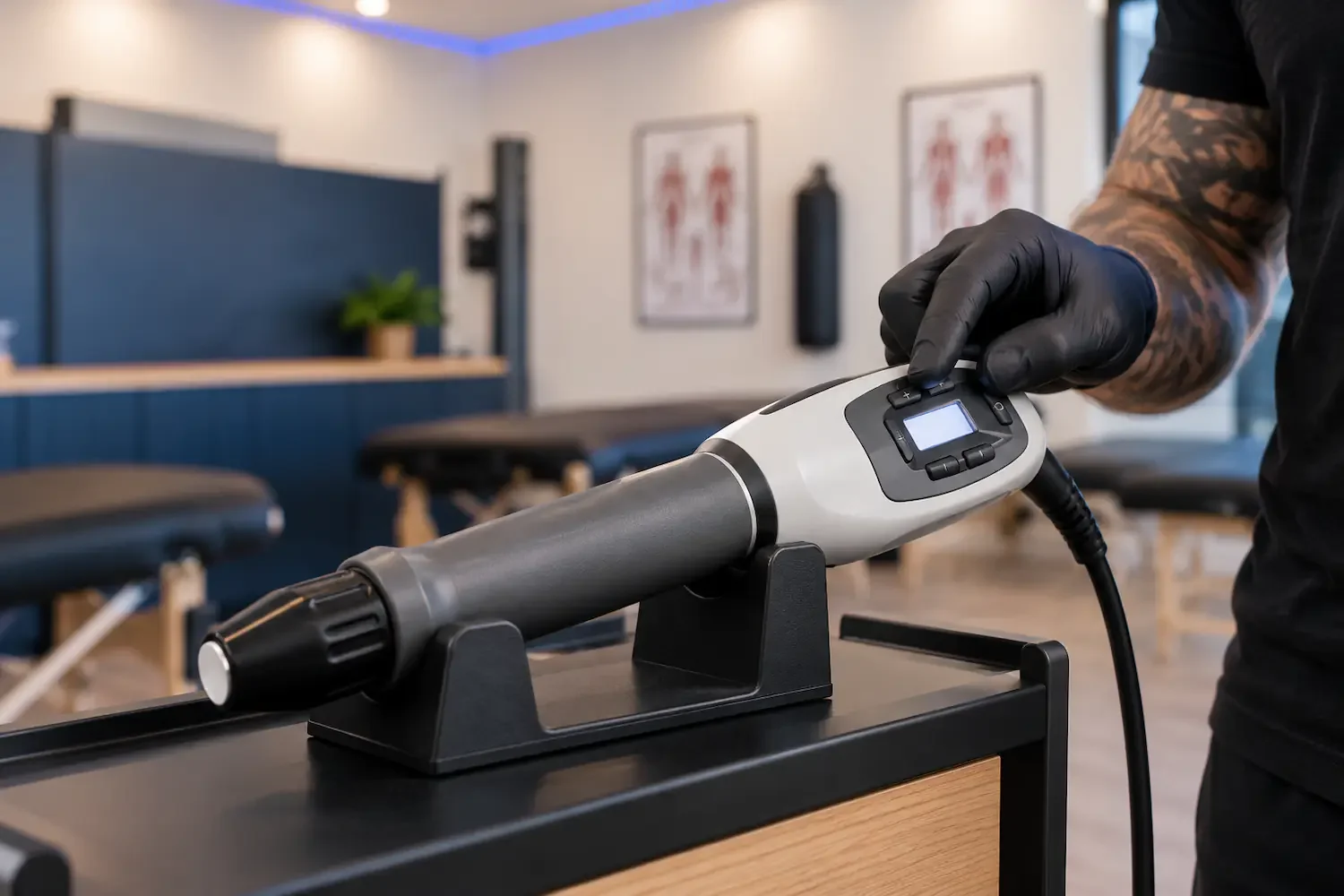
Radial shockwave therapy uses acoustic pressure waves to reach areas of chronic pain and tension in muscles, tendons and connective tissue. A practitioner holds a handheld applicator against your skin, and the device sends rapid pulses of mechanical energy into the tissue underneath. The word radial describes how that energy travels: it spreads outward from the tip of the applicator across a wider area, rather than being concentrated at one precise depth.
That wider spread is what makes radial shockwave well suited to the kinds of problems most active people deal with: a heel that's sore every morning, an elbow that flares up after tennis or lifting, a shoulder that never quite settles, or a knot in the hip or calf that massage only ever relieves for a day or two.
The idea behind the treatment is simple. Tissue that's been irritated for months often gets stuck in a loop of tension, limited circulation and ongoing discomfort. Shockwave therapy is designed to interrupt that loop by stimulating local blood flow and the body's own repair response in the exact spot that needs it. It's a non-invasive option, meaning no needles, no injections and no incisions.
Radial shockwave vs. the "shockwave therapy" you might see in search results
If you've searched for shockwave therapy in Woodland Hills or the San Fernando Valley, you may have noticed that a lot of results are about low-intensity shockwave for men's health. That's a different application with different equipment and goals. Radial shockwave therapy at Biohack is focused on the musculoskeletal side: muscles, tendons, fascia and the kind of stubborn soft tissue pain that gets in the way of training, work and everyday movement.
You'll also see it called extracorporeal shockwave therapy, or ESWT. Extracorporeal just means the energy is delivered from outside the body. Radial shockwave is one type of ESWT. The other main type, focused shockwave, concentrates energy at a specific depth and is more often used in medical and orthopedic clinics.
Before your first session
Booking
Sessions are booked the same way as every other service at the studio, through the online scheduling page or the booking block on the radial shockwave therapy page. Current session options and rates are shown when you book.
If you're not sure whether shockwave is the right fit, or you're deciding between shockwave and myofascial release, you can reach out to the team before booking. Many clients end up using both, and we'll explain why further down.
Check whether shockwave is right for you
Shockwave therapy isn't for everyone. It's typically avoided during pregnancy, over areas with an active infection, tumors, implants or metalwork, over an area that's had a steroid injection in roughly the last three months, and for people with blood clotting disorders or who take blood thinners. It's also generally not used for anyone under 18. If you have a medical condition or you're under the care of a doctor for the area you want treated, check with your healthcare provider before booking.
What to wear
Wear comfortable clothing that gives easy access to the area being treated. Shorts work well for heel, Achilles, calf, knee and hip work. A tank top or loose short-sleeved shirt is best for elbow and shoulder work. Your practitioner will apply a thin layer of gel to the skin, so avoid anything you'd mind getting a little gel on.
Arrive a few minutes early
For your first visit, plan to arrive a few minutes early. That gives your practitioner time to talk through your history and goals without cutting into your treatment time.
During your session: step by step
Step 1: A short conversation about your pain
Every session starts with questions. Where exactly do you feel it? How long has it been there? Is it worse first thing in the morning, during activity, after activity, or when you've been sitting for a while? What have you already tried?
This matters more than it might seem. Shockwave works best when it's aimed precisely, and the answers help your practitioner decide which areas to treat and where to start.
Step 2: Finding the tender spots
Next, your practitioner will feel the area to locate the most sensitive points. With heel pain, that's often near the inner part of the heel bone. With elbow pain, it's usually a spot just above the joint on the outer or inner side. Trigger points in the calf, glutes, upper back or shoulders often feel like small, tight nodules that are tender to press.
You'll be asked for feedback as they go. Saying "that's the spot" is useful information.
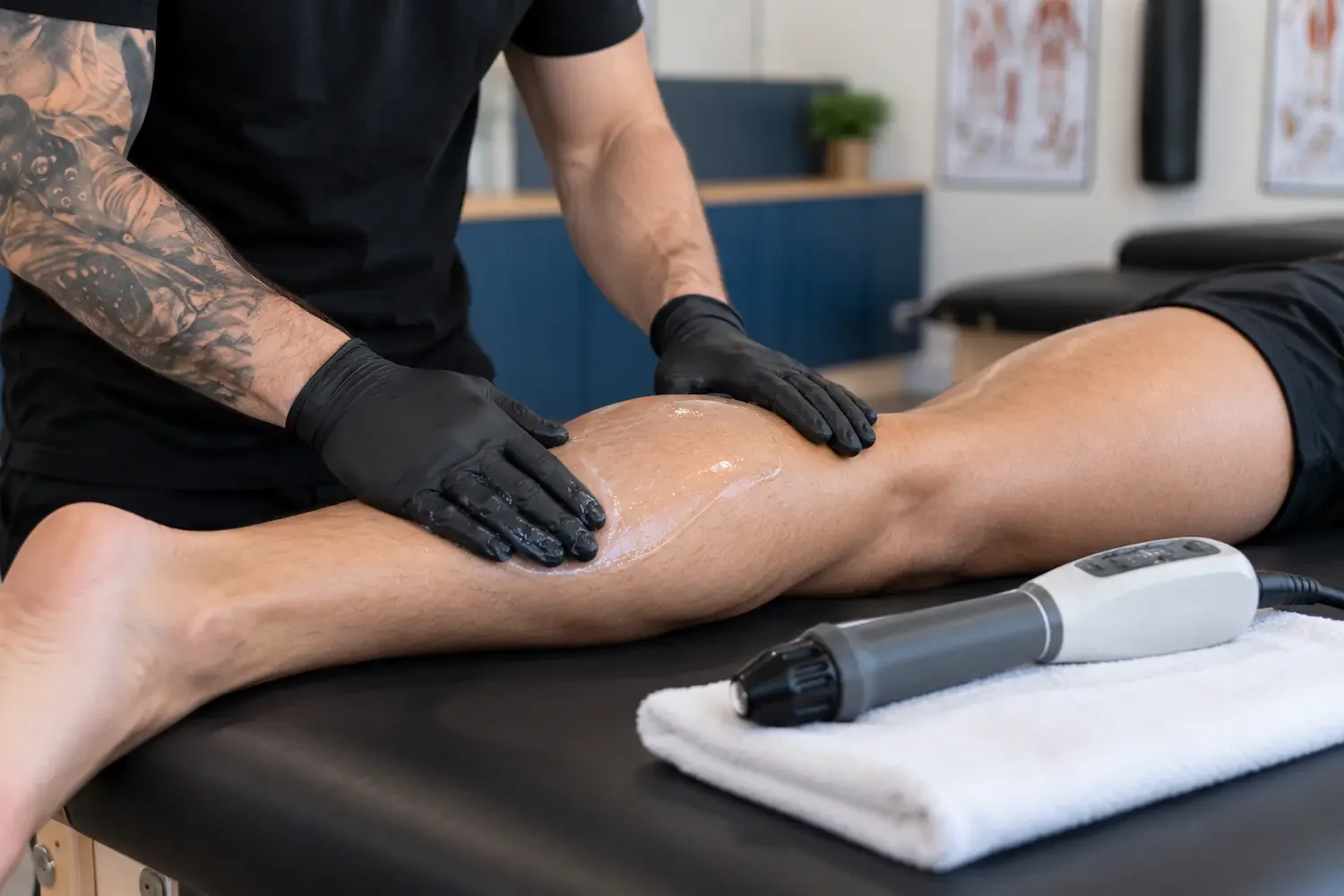
Step 3: Gel and the applicator
A thin layer of gel goes on the skin to help the acoustic waves pass smoothly into the tissue. Your practitioner then places the applicator on the area and starts the device, usually at a lower setting to begin with.
Step 4: The treatment itself
This is the part people are most curious about. Radial shockwave feels like a rapid, firm tapping or pulsing. It's loud enough that you'll hear a clicking sound from the device. Over areas that aren't sore, most people describe it as strong but tolerable. Over the most tender spots, it can feel intense, sometimes sharp, for a few seconds at a time.
Your practitioner will move the applicator around the area and adjust intensity based on how you respond. Many people find that a spot that feels very intense at the start of a session becomes noticeably easier to tolerate within a minute or two.
The treatment itself usually takes just a few minutes per area. If you're having more than one area treated, each gets its own few minutes.
Step 5: Wrapping up
Once the treatment is done, the gel is wiped away, and your practitioner will talk you through what to expect over the next few days and when to come back. That's it. There's no recovery room and no waiting period before you can leave.
Does radial shockwave therapy hurt?
Honest answer: it can be uncomfortable, especially over the areas that have been bothering you the longest. That discomfort is normal and expected, and it's one of the reasons treatment is delivered in short bursts with constant check-ins.
What it shouldn't be is unbearable. You're always in control. If a setting feels like too much, say so, and your practitioner will turn it down or shift the applicator slightly. Communicating throughout is part of the process, not an interruption of it.
A useful way to think about it: most people find it similar to firm trigger point work or a deep myofascial session, just faster and more rhythmic. If you've had myofascial release and handled it well, you'll likely be fine with shockwave.
How long a session takes
The hands-on shockwave portion is short, typically a few minutes per treatment area. Your total appointment time is longer than that once you add the check-in conversation, locating the treatment points, the treatment itself and a short wrap-up. For your first session, plan a little extra time for the initial conversation.
Because the treatment is quick, shockwave is easy to fit into a lunch break or to stack with another service in the same visit. More on that below.
How many sessions will you need?
Shockwave therapy is designed to work over a series rather than as a one-time fix. Most published protocols use roughly three to five sessions spaced about a week apart, and some longer-standing issues may take a few more. The exact number depends on:
• How long the problem has been there. A heel that's been sore for two years usually needs more time than one that started two months ago.
• The area being treated. Deeper or larger areas may respond differently from smaller, more superficial ones.
• How your body responds. Some people notice relief after the first session, while for others the change builds over several weeks.
• What you do between sessions. Load management, sensible training and the right mobility work all make a difference.
Your practitioner will suggest a realistic plan after your first visit based on what they find and how you respond.
What happens after your session
Right after
You can walk out and get on with your day. Most people return to work and normal daily activity immediately. The treated area may feel a little warm, flushed or tender, and some people notice it feels looser or easier to move.
The next 24 to 48 hours
Mild soreness, redness or tenderness in the treated area is common and typically settles within a few days. Occasionally people notice slight bruising, swelling or a tingling sensation. These are normal responses and usually fade within a week.
Aftercare: the three rules
1. Skip the ice and anti-inflammatories on the treated area. This surprises a lot of people. Shockwave is designed to stimulate a local recovery response, and icing or taking anti-inflammatory medication may work against that. If you need pain relief, check with your healthcare provider about what's appropriate for you.
2. Take it easy for about 48 hours. Avoid strenuous or pain-provoking activity with the treated area for the first couple of days. Walking and normal daily movement are fine. Save the long run, heavy lifting or a tennis match for later in the week.
3. Keep your follow-up appointments. Results build across the series. Skipping sessions or spacing them out too far makes it harder to judge what's working.
When will you notice a difference?
This is where expectations matter. Some clients notice their pain is easier or their range of motion is better right after the first session. More often, the change is gradual, building over the course of the series and in the weeks after the final session as the tissue continues to respond.
A helpful habit is to track one or two simple markers from the start, like how your heel feels in your first ten steps out of bed, or how many minutes into a run your Achilles starts to complain. Small, consistent improvements in those markers tell you more than how you feel on any single day.
Pairing shockwave with other services at Biohack
One of the advantages of getting shockwave at a recovery studio rather than as a standalone appointment is that it fits naturally alongside other services in the same building.
• Myofascial release: Shockwave targets a specific problem spot quickly. Myofascial release addresses the broader pattern of tight fascia and muscle around it. For something like a stubborn calf and heel issue, using both can make sense. If you want to know more about hands-on bodywork, our guide to what a myofascial release session actually involves walks through it.
• Normatec compression: A comfortable way to support circulation in the legs, arms or hips after a treatment, especially for runners.
• Contrast therapy: Infrared sauna and cold plunge for general recovery on the days you're not getting shockwave. Just keep cold exposure away from the treated area for the first 48 hours, in line with the no-ice guidance above.
• The Ammortal Chamber: For a deeper, whole-body reset on a separate day, especially if stress and poor sleep are part of what's slowing your recovery.
Ask the team which combination makes sense for your goals. Not every client needs every service, and a simple, consistent plan usually beats a complicated one.
Who radial shockwave therapy tends to suit
Radial shockwave tends to suit a few groups of people:
• Runners and walkers with heel pain, Achilles tightness or shin discomfort that keeps coming back.
• Lifters and CrossFit athletes with elbow, shoulder or hip irritation from repetitive loading.
• Tennis, pickleball and golf players dealing with the classic outer or inner elbow flare-up.
• Desk workers with trigger points and tension in the upper back, neck and shoulders.
• Anyone who's tried rest, stretching and massage and still has one spot that won't settle.
If you're in one of these groups and live in Woodland Hills, Calabasas, Tarzana, Encino, West Hills or elsewhere in the San Fernando Valley, Biohack is a convenient place to start.
Common first-timer mistakes to avoid
A few patterns are common with people who are new to shockwave therapy, so they're worth mentioning.
Expecting one session to fix a two-year problem. Chronic issues took time to develop, and they usually take a short series to respond. Commit to the plan before judging the results.
Icing afterward out of habit. It's a reflex for many athletes. For shockwave, skip it on the treated area.
Going straight back to hard training. Feeling better after a session is great, but give the area about 48 hours before loading it heavily.
Staying quiet during treatment. Your feedback shapes the session. If something is too intense, or if you feel the "right spot," say so.
Fitting shockwave into your training week
If you're training for something, timing your sessions well makes the series easier to stick with. A few simple guidelines help.
Book sessions before a lighter day, not before a hard one. Because you'll want to avoid strenuous or pain-provoking activity with the treated area for about 48 hours, a session on a Monday or after your long run or heavy session is often easier to work around than one right before a key workout.
Keep the same day each week if you can. Weekly spacing is typical, and a consistent slot makes it far less likely you'll skip one. Many clients book the whole series at once so it's locked in.
Don't skip the boring work. Shockwave is a strong stimulus, but the people who see the best long-term results usually pair it with strength and mobility work for the area. For heel and Achilles problems that often means progressive calf and foot strengthening. For elbows it often means grip and forearm work. A coach or physical therapist can help you choose the right exercises.
Plan your other recovery around it. Sauna, compression and the Ammortal Chamber can all fit into the same week. Just keep cold exposure off the treated area for the first couple of days after each session.
Questions worth asking at your first appointment
You'll get more out of your first visit if you come in with a few questions. These tend to be the most useful:
• Which exact areas are you going to treat, and why? Pain doesn't always sit exactly where the problem starts, and it helps to understand the plan.
• How many sessions do you expect I'll need? You'll get a realistic estimate based on how long the issue has been there and how you respond.
• What should I avoid between sessions? Your practitioner can tell you which activities to reduce and which are fine to keep doing.
• Would another service help alongside this? Sometimes the answer is myofascial release for the surrounding tissue, sometimes compression, and sometimes nothing else at all.
• What should I track to know it's working? Agreeing on one or two simple markers makes it easier to judge progress fairly over the series.
There are no bad questions. The more you understand the plan, the more likely you are to follow it, and consistency is what makes shockwave work.
Visiting Biohack in Woodland Hills
Biohack Cryo & Wellness is at 5305 Topanga Canyon Blvd in Woodland Hills, easy to reach from the 101, Ventura Boulevard and Topanga Canyon Boulevard. The studio regularly welcomes clients from Calabasas, West Hills, Tarzana, Encino, Canoga Park, Sherman Oaks and Thousand Oaks.
Ready to try it? Book your first session on the radial shockwave therapy page, or explore memberships and packages if you're planning to make recovery a regular part of your routine.
Frequently asked questions
What does radial shockwave therapy feel like?
It feels like a rapid, firm tapping or pulsing on the skin, with a clicking sound from the device. It can feel intense over the most tender spots, and your practitioner adjusts intensity based on your feedback.
How long does a shockwave session take?
The treatment itself usually takes just a few minutes per area. Your appointment is a bit longer to allow for a short check-in, locating the treatment points and wrapping up.
How many shockwave sessions will I need?
Most people do a short series of about three to five sessions spaced roughly a week apart. Longer-standing issues may need a few more. Your practitioner will suggest a plan after your first visit.
Is there any downtime after shockwave therapy?
No. Most people return to normal daily activities right away. Avoid strenuous or pain-provoking activity with the treated area for about 48 hours.
Can I ice the area after shockwave therapy?
It's best to avoid ice and anti-inflammatory medication on the treated area after a session, as they may work against the recovery response shockwave is designed to stimulate.
Is soreness after shockwave normal?
Yes. Mild soreness, redness or tenderness is common and usually settles within a few days.
Is radial shockwave the same as shockwave therapy for ED?
No. Radial shockwave therapy at Biohack is used for muscles, tendons and soft tissue pain. Shockwave for men's health is a different application with different equipment.
Can I combine shockwave with other services?
Yes. Many clients pair it with myofascial release or Normatec compression. Keep cold plunge and cryotherapy away from the treated area for the first 48 hours.
Where can I get radial shockwave therapy near Woodland Hills?
Biohack Cryo & Wellness offers radial shockwave therapy at 5305 Topanga Canyon Blvd in Woodland Hills, serving clients across the San Fernando Valley.
Radial shockwave therapy at Biohack Cryo & Wellness is a wellness service and is not intended to diagnose, treat or cure any medical condition. Individual results vary.