
Normatec compression therapy: how sequential pulse technology speeds up recovery
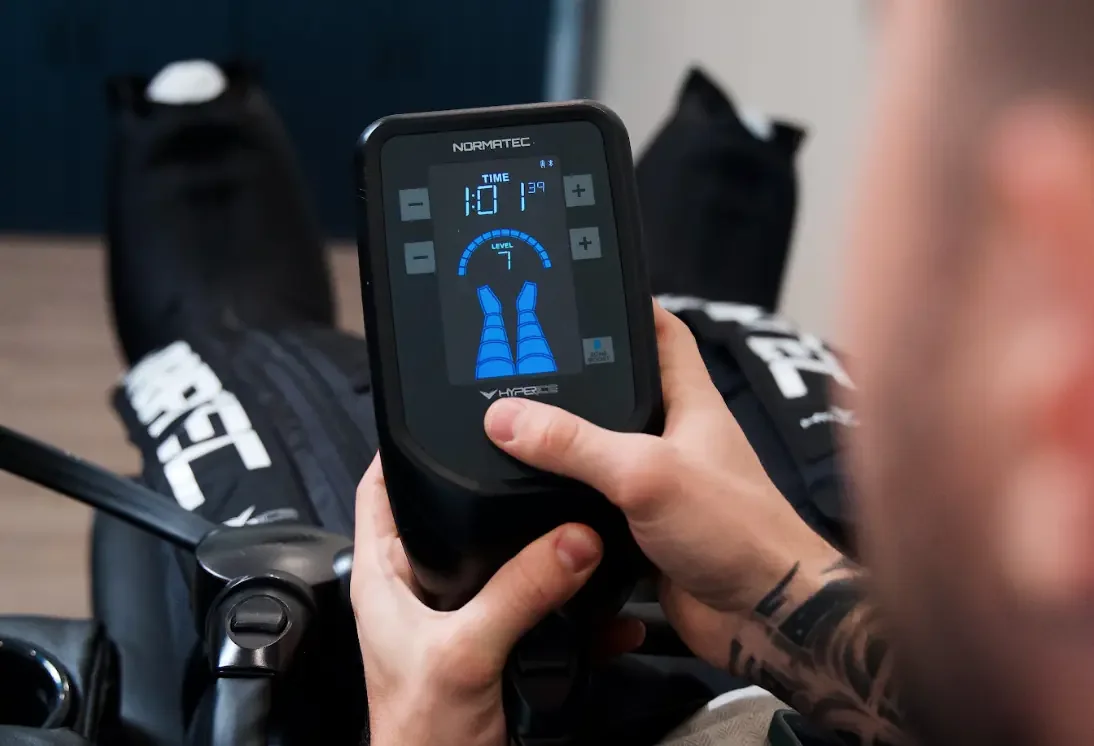
Normatec compression therapy uses sequential pulse technology, not a simple even squeeze, to move fluid through tired limbs more effectively than static compression garments. That distinction is what separates it from compression socks or basic sleeves, and it's worth understanding why the technology behind it makes a real difference in recovery.
What sequential pulse technology actually does
Instead of applying even pressure across your legs, or arms, all at once, Normatec's sleeves are divided into multiple zones that inflate and release in a specific sequence, starting distally and moving upward. That pulsing, wave-like pattern is designed to mimic the body's natural muscle pump, the mechanism muscles use to help move fluid back toward the heart during movement. Cleveland Clinic notes that intermittent pneumatic compression devices work by inflating in cycles to help move blood and fluid through the limbs more effectively than static pressure alone.
By moving in a sequence rather than clamping down all at once, the sleeves help push blood and lymphatic fluid out of tired limbs, which is what supports faster reduction in the heavy, swollen feeling that follows hard training. Cleveland Clinic's overview of compression therapy covers the broader category these devices fall under, including both medical and recovery applications.
How it differs from compression socks or sleeves
Regular compression garments apply constant, even pressure the whole time you're wearing them. Normatec's sequential, zone-by-zone pulsing is an active process rather than a passive, static one, cycling through each zone in a pattern rather than simply holding steady pressure across the whole limb. That active movement is the main reason it's built into recovery routines specifically, rather than worn passively throughout the day the way compression socks often are.
What it's good for
Normatec sessions are popular after leg day, long runs, tournaments, or any day where your legs feel heavy and it's time to help them recover. It's also useful for anyone dealing with general fatigue or sluggish circulation in the legs after a long day on your feet, not just athletes in the middle of a training block.
What a session feels like
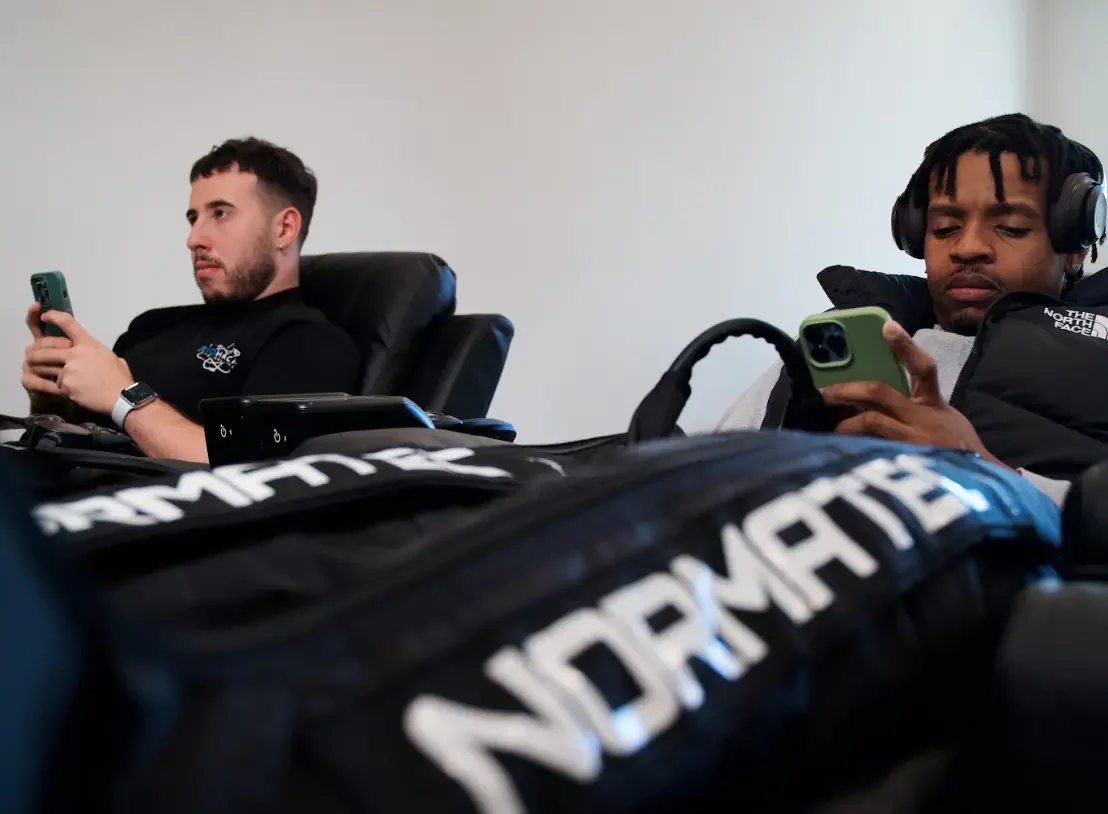
You'll settle in, the sleeves go on, and the sequential pulses begin cycling through each zone. Most people find it comfortable, even relaxing, and sessions are a good time to sit back, catch up on messages, or just decompress while the technology does its job.
Who should be cautious with compression therapy
Cleveland Clinic notes that pneumatic compression devices are generally well tolerated but are not appropriate for everyone, particularly anyone with an active blood clot, certain circulatory conditions, or a recent leg injury that hasn't been evaluated. This is general education, not individualized medical advice; anyone with a relevant health condition should check with a physician before booking.
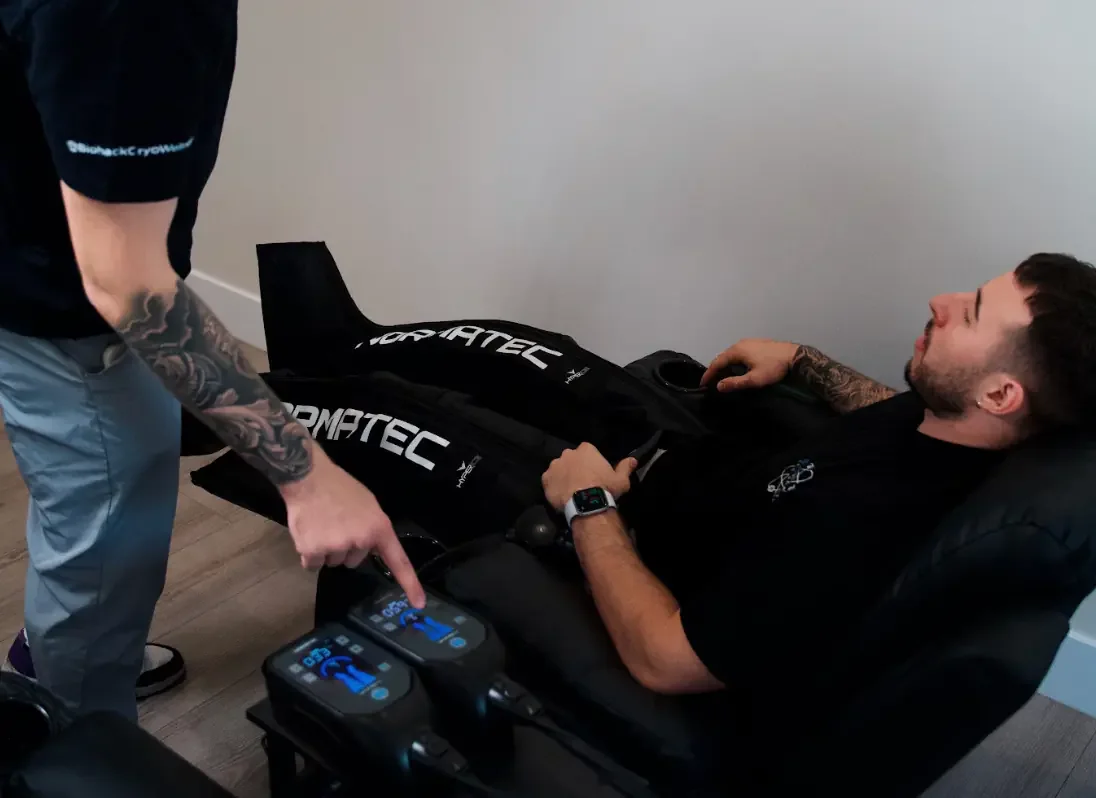
Aftercare: what to do once the sleeves come off
Compression works best as part of a broader recovery habit, not as a stand-alone fix. Hydrating well after a session, keeping up with basic mobility work, and giving your body adequate sleep all support the same fluid-moving, inflammation-reducing goals that Normatec is working toward during the session itself. None of that is a strict requirement, but it's a simple way to get more out of the time you're already spending in the sleeves.
Pairing Normatec with other recovery services
Normatec pairs well with other services in the studio. Some clients use it after a cold plunge or myofascial release session to round out a more complete recovery routine, using compression to move fluid after the other therapies have already done their work.
A brief history of pneumatic compression
Pneumatic compression devices started in medical settings, primarily for supporting circulation and reducing the risk of blood clots in patients with limited mobility. Cleveland Clinic's overview of intermittent pneumatic compression covers that clinical background. Sports and recovery use came later, adapting the same core mechanism, cyclical inflation that helps move fluid through the limbs, for athletes and active people looking to recover faster between training sessions rather than for a specific medical need.
Choosing between arms, legs, or both
Most people think of Normatec as a leg-focused therapy, and legs are where it's used most often, especially after running, cycling, or heavy lower-body training. Compression sleeves for the arms address the same kind of fatigue and heaviness after upper-body training or repetitive overhead work. If you're not sure which makes sense for what you're training, our team can help you figure out where you're carrying the most fatigue and build the session around that.
Timing it around your training
Compression works well both immediately after a hard session, while soreness and fluid retention are building, and the following day, once the heaviness in your legs has fully set in. Some clients book it the same day as a long run or a heavy lower-body lift; others prefer it the morning after, once they can feel exactly where the fatigue landed. Both timing approaches are common, and which one works better tends to come down to personal preference and how your body typically responds to hard training.
Signs your legs are telling you it's time for compression
Heaviness that lingers into the next day, stiffness climbing stairs, or legs that feel puffy or tight by the end of a long day on your feet are all common signals that fluid and metabolic waste have built up faster than your body is clearing them on its own. None of these are emergencies, and most of the time they're simply a normal response to training load or a demanding week, but they're also exactly the kind of everyday fatigue Normatec is built to help with.
The bigger picture: compression as part of a routine, not a one-off
Like most recovery tools, Normatec tends to deliver more noticeable value as a consistent part of a training routine than as an occasional treat after an unusually hard day. Athletes and active adults across Woodland Hills and the San Fernando Valley who build it into a weekly rhythm, alongside strength training, running, or other regular activity, generally report it's easier to stay ahead of accumulated fatigue than to try to catch up on it after the fact.
Book your Normatec session in Woodland Hills
If your legs are feeling the effects of hard training or a long week on your feet, book a Normatec session at our Woodland Hills studio, or get in touch with questions before your first visit.
Frequently asked questions
How is Normatec different from regular compression socks or sleeves?
Regular compression garments apply constant, even pressure. Normatec uses sequential pulse technology that inflates and releases in zones, actively moving fluid rather than just holding steady pressure.
How often should I use Normatec?
Frequency depends on training load. Many clients use it several times a week during heavier training blocks and less often otherwise. Our team can help build a schedule around your training.
Can I use Normatec if I'm not an athlete?
Yes. It's helpful for anyone dealing with heavy, tired legs or general circulation concerns after a long day, not just athletes.
Is Normatec compression safe for everyone?
It's generally well tolerated, but it isn't appropriate for everyone, particularly anyone with an active blood clot or certain circulatory conditions. Check with a physician if you have a relevant health concern.
Can I pair Normatec with other recovery services in one visit?
Yes, it's commonly paired with cold plunge, myofascial release, or other services in the same visit. Ask our team about building a full recovery session.
Should I book Normatec before or after a hard workout?
Both timings are common. Some clients book it the same day as a hard session while soreness is building; others prefer it the next morning once fatigue has fully set in. Either approach works, and it often comes down to personal preference.
Can I use Normatec on my arms instead of my legs?
Yes. Compression sleeves are available for both legs and arms, so the session can be built around wherever you're carrying the most fatigue.