
Infrared Sauna and Cold Plunge in Sherman Oaks & Tarzana: Your Closest Private Recovery Studio
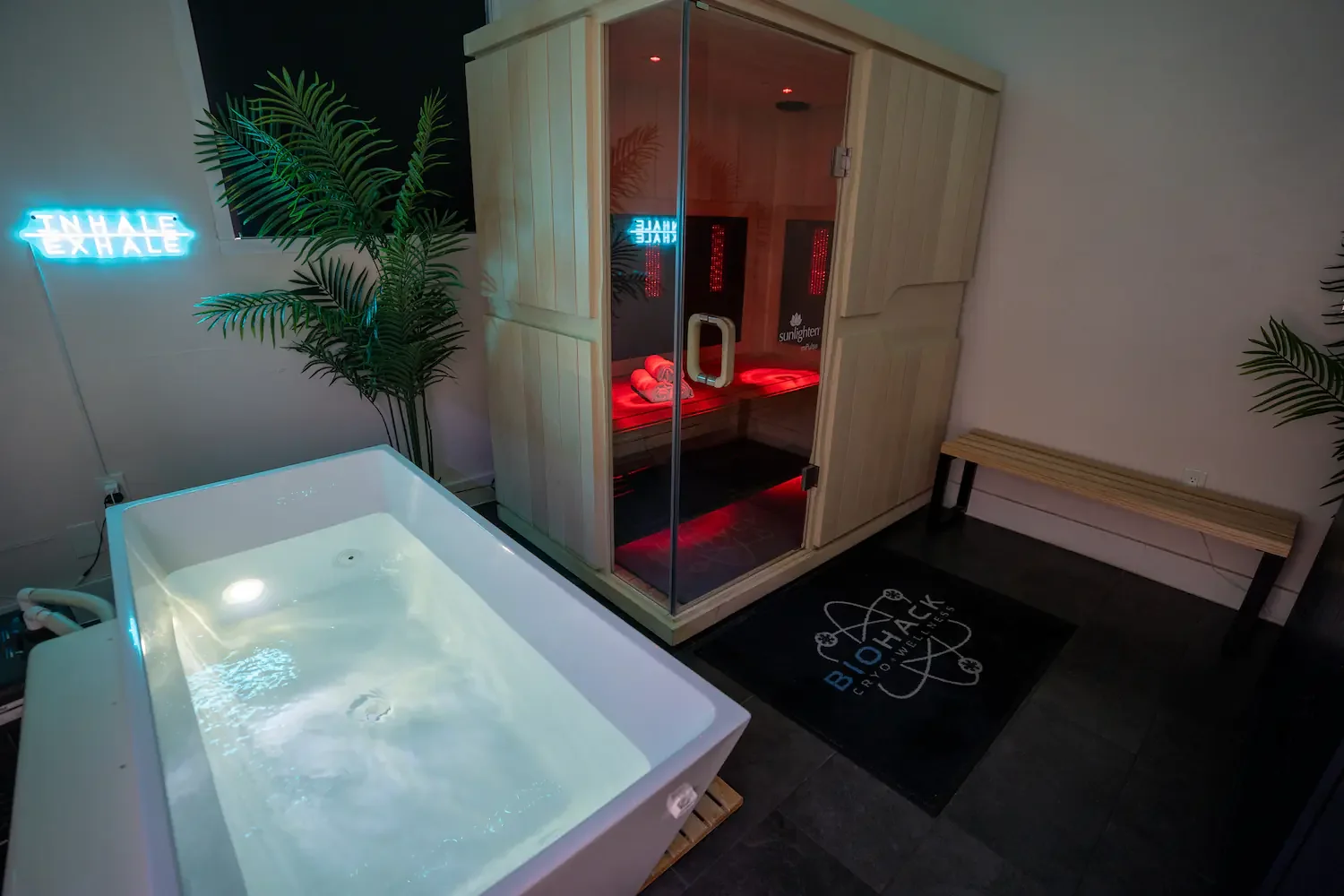
If you're in Sherman Oaks or Tarzana searching for infrared sauna or cold plunge, Biohack Cryo & Wellness in Woodland Hills is a private, practitioner-supported recovery studio that's already part of the area it serves — both cities are within Biohack's regular client base, not a stretch destination. This guide covers what each service actually involves, why clients often do both together, and what to expect on your first visit.
What "Near Sherman Oaks" and "Near Tarzana" Actually Mean Here
Neither city is a stretch for Biohack to serve — both already appear in the studio's own published service area alongside Woodland Hills, Calabasas, Encino, and West Hills, and the drive from most of Sherman Oaks or Tarzana runs a matter of minutes along Ventura Boulevard or Topanga Canyon Boulevard rather than a cross-Valley trek. That matters for a service like infrared sauna or cold plunge specifically, because both work best as a routine rather than an occasional treat — and a routine only holds up if the drive isn't a barrier. A short, realistic trip is easier to fit into a regular weekly schedule than a longer cross-town commute would be.
Why "Private Studio" Actually Matters
A lot of near-me searches for infrared sauna or cold plunge turn up results that are really a single room bolted onto a gym or day spa — booked in a shared schedule, sized for efficiency rather than comfort, and staffed by whoever happens to be covering the front desk that day. Biohack is built differently: a dedicated recovery studio where infrared sauna and cold plunge are core services, not an add-on to something else, with private rooms and a team that can actually walk you through session length, temperature, and pairing recommendations rather than just handing you a towel and a timer.
Two Services, One Trip: Why That's the Real Advantage
The bigger picture worth understanding here isn't just that Biohack has an infrared sauna and a cold plunge — plenty of places have one or the other. It's that having both under one roof, run by the same team, in private rooms designed for exactly this purpose, means you're not stitching together a routine across two or three different providers. For Sherman Oaks and Tarzana clients specifically, that consolidation is often the actual reason the drive makes sense: instead of a sauna membership at one place and an occasional cold plunge session somewhere else, it's one studio, one visit, one team that knows your preferences for both.
What an Infrared Sauna Session Involves
A typical infrared sauna session at Biohack runs 30 to 45 minutes in a private room. Unlike a traditional sauna, which heats the air around you to 150°F–195°F, infrared saunas use direct infrared light to warm your body from within at a more tolerable ambient temperature — which is part of why sessions can run longer than a traditional sauna without becoming unbearable. Biohack's sauna is designed to emit near, mid, and far infrared wavelengths together: near-infrared is associated with skin health and cell healing, mid-infrared with pain relief and circulation, and far-infrared with deeper detoxification and relaxation.
Because the room is private, what you wear is entirely up to your comfort — many clients wear a swimsuit or shorts to absorb sweat, though some prefer going without clothing to maximize skin exposure to the infrared light. Either way, breathable fabric is recommended if you do wear something. Staying hydrated before and after is important, since sessions involve real sweating; a light snack beforehand is fine, but a heavy meal right before isn't recommended.
For first-timers, starting with a shorter session and building up is the usual approach, with two to three sessions a week being a common starting cadence — though some clients use the sauna more frequently depending on their goals and how their body responds.
What a Cold Plunge Session Involves
Cold plunge sessions at Biohack take place in a private, temperature-controlled room, with the plunge itself capable of reaching as low as 39°F (and adjustable based on your preference and experience level). Room sessions are 15 minutes long, which gives you time to prepare, plunge, and reset — actual immersion time is typically much shorter, with first-timers aiming for 0 to 2 minutes, beginners around 2 to 3 minutes, and more experienced clients extending to 3 to 5 minutes.
Each room comes stocked with clean towels, body shower wipes, and a bag for wet clothes, and the water itself is maintained through a continuous 20-micron filtration and ozone sanitation system, drained and replaced daily, and tested before each session for cleanliness and pH balance.
Cold plunge isn't the right fit for everyone — clients with heart conditions, high blood pressure, Raynaud's disease, or who are pregnant should check with a healthcare provider before trying it.
Why Clients in Sherman Oaks & Tarzana Often Do Both
Infrared sauna and cold plunge work through opposite mechanisms — heat-driven relaxation and detoxification on one side, cold-triggered circulation and alertness on the other — which is exactly why so many clients pair them in a single visit as a form of contrast therapy. A common sequence is sauna first to relax and open circulation, followed by a cold plunge for the sharp, energizing reset. For clients driving in from Sherman Oaks or Tarzana specifically, combining both in one trip makes the most of a single visit rather than coming in twice for two shorter sessions.
Near, Mid, and Far Infrared: Why the Combination Matters
Not all infrared saunas are built the same way, and it's worth knowing what you're actually getting. Infrared light is categorized by wavelength into near, mid, and far infrared, and each is associated with somewhat different effects: near-infrared is generally linked to skin health and cell healing, mid-infrared to pain relief and circulation, and far-infrared to deeper detoxification and relaxation. A sauna built around only one wavelength range delivers a narrower set of benefits than one designed to emit all three together, which is the approach Biohack's sauna takes — you're not choosing between skin benefits, circulation, or detox, you're getting all three in the same session.
Building Cold Tolerance Over Time
If cold plunge is new to you, it's worth setting realistic expectations for the first few visits rather than pushing straight to a 5-minute immersion. Most people's first plunge is genuinely uncomfortable for the first 20 to 30 seconds — that's the cold-shock response, and it passes. Starting at 0 to 2 minutes and building from there over several visits is the normal, expected progression, not a sign you're doing it wrong. Staff can coach you through breathing techniques that make the first minute noticeably more manageable, which is one of the advantages of a supervised, practitioner-supported studio over a plunge you might set up at home.
What to Expect on Your First Visit
If you're new to either service, plan for a bit of extra time on your first visit for a quick walkthrough of the room, equipment, and any preferences (sauna temperature, cold plunge depth of immersion). Staff can help you decide on session order if you're doing both, and there's no obligation to push either session further than feels right — building tolerance over a few visits is completely normal, especially for cold plunge.
Why a Dedicated Recovery Studio Beats a Gym Sauna or Plunge
Sherman Oaks and Tarzana both have gyms with a sauna room or, increasingly, a cold plunge tub tucked in the locker room. The appeal is obvious — it's already part of a membership you're paying for. The tradeoff is real, too: gym sauna and plunge setups are typically shared, unsupervised, and not maintained with the same rigor as a facility where recovery is the actual business. Biohack's cold plunge system, for example, runs continuous 20-micron filtration and ozone sanitation, with water tested before every session — a level of upkeep that's hard to match in a shared gym amenity used by dozens of people a day without dedicated staff monitoring it. For an occasional, no-frills sweat, a gym sauna is fine. For a session you're actually building a recovery routine around, the difference in privacy, cleanliness, and guidance tends to matter more the more often you go.
A Sample First Visit From Sherman Oaks or Tarzana
If you're coming from either city and want to make the most of the drive, a reasonable first visit looks like this: arrive with about 10 to 15 minutes of buffer for check-in, start with the infrared sauna for 30 to 45 minutes to relax and open circulation, take a few minutes to cool down and rehydrate, then finish with a shorter cold plunge session — even just a minute or two on a first try is a legitimate starting point. That sequence alone runs about an hour including transitions, and gives you a real sense of both services without overcommitting on your first visit. From there, staff can help you figure out whether you want to keep doing both together, focus on one, or add a third service like Normatec compression into future visits.
The Ventura Boulevard and Topanga Canyon Boulevard Routes
Most Sherman Oaks clients reach Biohack via Ventura Boulevard heading west before cutting north on Topanga Canyon Boulevard, a route that stays on surface streets or a short stretch of the 101 depending on where in Sherman Oaks you're starting from. Tarzana clients are often even closer, with much of the drive running directly along Ventura Boulevard itself before the final turn onto Topanga Canyon Boulevard toward the studio at 5305 Topanga Canyon Blvd. Neither route requires a freeway-heavy commute, which is a meaningful part of why infrared sauna and cold plunge work as a realistic weekly habit for clients in both cities rather than a special-occasion trip. Evening sessions after work are a common booking pattern for exactly this reason — the drive itself isn't the barrier that it can be for clients coming from farther out in the Valley.
Why Consistency Matters More Than Any Single Session
Both infrared sauna and cold plunge deliver a noticeable immediate effect — the sauna's warmth and relaxation, the plunge's sharp, energizing reset — but the more meaningful benefits of either service, like improved circulation, better sleep, and reduced chronic inflammation, tend to build with a consistent routine rather than appearing after one or two visits. That's part of why proximity matters as much as it does: a service you can realistically get to once or twice a week produces different results than one you can only manage once a month. For Sherman Oaks and Tarzana clients specifically, the short drive is what makes a genuine weekly cadence realistic, which is ultimately the difference between using these services occasionally and actually building them into a routine that shows measurable results over a few months.
Infrared Sauna, Cold Plunge, and the Rest of the Recovery Ecosystem
While sauna and cold plunge are the two services this guide focuses on, Biohack's studio includes a broader set of recovery tools worth knowing about if you're building out a fuller routine over time. Cryotherapy offers a faster, more intense version of the cold-exposure benefits the plunge provides, in a fraction of the time. Normatec compression extends circulation benefits after either sauna or plunge, and is a common add-on for clients who want to maximize a single visit. The Ammortal Chamber combines five separate recovery technologies into one longer session and is the only one of its kind in the San Fernando Valley. And for clients dealing with a specific area of chronic tightness rather than general recovery, myofascial release offers a more targeted, hands-on option. None of these are required alongside sauna and cold plunge, but knowing they're available in the same building means a routine can grow over time without switching providers.
Making Infrared Sauna and Cold Plunge a Weekly Habit
For Sherman Oaks and Tarzana clients specifically, a membership or package tends to make the most sense once you've settled into a regular cadence — typically once you notice you're booking again within the same week rather than every few weeks. Beyond the cost savings a membership usually provides over repeated drop-in bookings, there's a practical benefit too: a short, reliable drive combined with a membership removes almost every barrier to consistency, which is exactly the condition under which infrared sauna and cold plunge tend to produce their most noticeable results. Ask the practitioner team about current membership options at your next visit, or when you book.
What Sherman Oaks and Tarzana Clients Ask Most
A few questions come up often enough from clients in these two cities specifically that they're worth addressing directly. Is it easier to book sauna and plunge back-to-back, or should they be separate visits? Either works, but back-to-back is more time-efficient for anyone making a real drive rather than a five-minute trip, and it's the more common choice among Sherman Oaks and Tarzana clients specifically. Is evening availability realistic after a workday in Sherman Oaks? Yes — evening slots are a popular booking window for clients coming straight from work along Ventura Boulevard, since the drive stays manageable outside of the heaviest commute hours. Do first-timers need to do both services, or is it fine to start with just one? Starting with one is completely reasonable — plenty of clients try the infrared sauna alone for a few visits before adding cold plunge once they're curious, and there's no requirement to do both from day one.
A Realistic Weekly Routine From Sherman Oaks or Tarzana
For clients who decide infrared sauna and cold plunge are worth keeping in a regular routine, a realistic weekly cadence looks something like this: one full sauna-and-plunge visit midweek, timed around a lighter workday, and a second, shorter visit on the weekend if schedule allows — though a single weekly visit is plenty for most clients to see meaningful benefit over time. Because the drive from Sherman Oaks or Tarzana is short enough to fit into a normal week without much disruption, this kind of routine tends to be far more sustainable than it would be for clients coming from farther across the Valley. Once you've settled into a cadence you like, ask about membership pricing — it typically pays off once you're visiting more than once every couple of weeks.
Comparing Infrared Sauna and Cold Plunge to a Traditional Spa Visit
It's a fair comparison for Sherman Oaks and Tarzana clients weighing Biohack against a more traditional day spa that happens to offer a sauna or cold plunge as one amenity among many. The key difference is focus. A day spa's sauna or plunge is typically a shared amenity, included as part of a broader membership built around massages, facials, and other services — meaning it's rarely the primary reason anyone books, and it's staffed and maintained accordingly. At Biohack, infrared sauna and cold plunge are core services the studio is built around, with private rooms, dedicated equipment maintained to a higher standard, and staff who can speak specifically to session length, temperature, and pairing recommendations rather than general spa guidance. For an occasional, low-stakes visit, either works. For a routine you're actually trying to build results around, the difference in focus tends to matter more over time.
What First-Time Visitors From Sherman Oaks or Tarzana Often Say
Clients making the trip from Sherman Oaks or Tarzana for the first time often mention two things after their initial visit: how much shorter the drive felt than expected, given how far Woodland Hills can sound on a map, and how different a private, dedicated room felt compared to a shared gym or spa amenity they'd used before. Neither reaction is unique to this studio specifically, but they're common enough first impressions that they're worth setting expectations around — the drive along Ventura Boulevard or Topanga Canyon Boulevard is genuinely manageable, and the private-room format is a noticeably different experience than most people's baseline expectation of what an infrared sauna or cold plunge visit looks like.
Nearby Communities Along the Same Corridor
While this guide focuses on Sherman Oaks and Tarzana specifically, the same short-drive logic applies to clients in the neighboring communities along Ventura Boulevard, including Encino and Studio City, both of which sit close enough to Woodland Hills to support the same kind of realistic weekly routine. If you're in one of these areas and weighing whether a dedicated recovery studio is worth the trip over a closer gym amenity, the same considerations apply: privacy, dedicated equipment, and a team focused specifically on recovery rather than general fitness. Biohack's location at 5305 Topanga Canyon Blvd is positioned to serve this entire stretch of the central and west Valley, not just the two cities named in this guide's title.
The Bottom Line for Sherman Oaks and Tarzana Clients
If you're comparing a dedicated recovery studio against whatever's closest on a map, the short version is this: the drive from Sherman Oaks or Tarzana to Woodland Hills is genuinely manageable along Ventura Boulevard or Topanga Canyon Boulevard, both services are core offerings here rather than an afterthought, and having both under one roof with practitioner guidance tends to matter more the more seriously you're trying to build a real recovery routine rather than an occasional treat. Clients who've tried both the closer, single-amenity option and Biohack's dedicated studio consistently point to the same handful of differences — privacy, water and air quality standards, and staff who can actually answer questions about session length or sequencing — as the reasons they kept coming back to the slightly longer drive rather than settling for whatever was five minutes closer.
Booking From Sherman Oaks or Tarzana
Biohack Cryo & Wellness is located at 5305 Topanga Canyon Blvd in Woodland Hills, easily reached from both Sherman Oaks and Tarzana via Ventura Boulevard or Topanga Canyon Boulevard, with parking available near the studio. Infrared sauna and cold plunge sessions can be booked individually or back-to-back, and both pair well with Normatec compression or the Ammortal Chamber if you want to extend the visit into a fuller recovery protocol.
Frequently Asked Questions
Is Biohack convenient from Sherman Oaks or Tarzana?
Yes — both cities are within Biohack's regular service area, easily reached via Ventura Boulevard or Topanga Canyon Boulevard, with parking available near the Woodland Hills studio.
How long is an infrared sauna session?
Typically 30 to 45 minutes. First-timers usually start shorter and build up, with two to three sessions a week being a common starting cadence.
How cold is the cold plunge, and how long do I stay in?
The plunge can reach as low as 39°F and is adjustable. Room sessions are 15 minutes long, though actual immersion time is usually much shorter — 0 to 5 minutes depending on experience level.
Do I need to bring anything for a cold plunge session?
No. Rooms are stocked with clean towels, body shower wipes, and a bag for wet clothes.
Can I do infrared sauna and cold plunge in the same visit?
Yes — many clients pair the two as contrast therapy, typically sauna first for heat and relaxation, followed by a cold plunge for the energizing reset.
What should I wear in the infrared sauna?
Since the room is private, it's up to your comfort — many clients wear a swimsuit or shorts, made of breathable fabric, though some go without clothing to maximize skin exposure to the light.
Who shouldn't do a cold plunge?
Clients with heart conditions, high blood pressure, Raynaud's disease, or who are pregnant should check with a healthcare provider before trying cold plunge.
Is a private studio really better than my gym's sauna or plunge?
For an occasional session, a gym amenity is fine. For a routine you're building around consistency, a dedicated studio typically offers more privacy, more rigorous cleanliness standards, and staff who can actually guide session length and pairing — advantages that matter more the more often you go.
How do I build up tolerance for cold plunge if I'm nervous about it?
Start at 0 to 2 minutes and build gradually over several visits — most of the discomfort is in the first 20 to 30 seconds. Staff can coach you through breathing techniques that make the first minute more manageable.