
HBOT for Recovery, Longevity, and Brain Health: What the Research Shows
You've optimized your sleep. You eat clean. You train hard. But if you're still not recovering as fast as you should — or you've noticed your cognitive edge isn't quite as sharp as it once was — the answer might lie in a tool that's been quietly studied in research institutions for decades. Hyperbaric Oxygen Therapy (HBOT) is no longer just a clinical treatment for divers and wound care. The emerging body of research is turning heads in longevity science, sports medicine, and neurology alike — and Woodland Hills residents now have access to it at Biohack Cryo & Wellness.
This article is for the skeptic, the researcher, the data-driven high performer who wants proof before they invest. Here's what the science actually says.
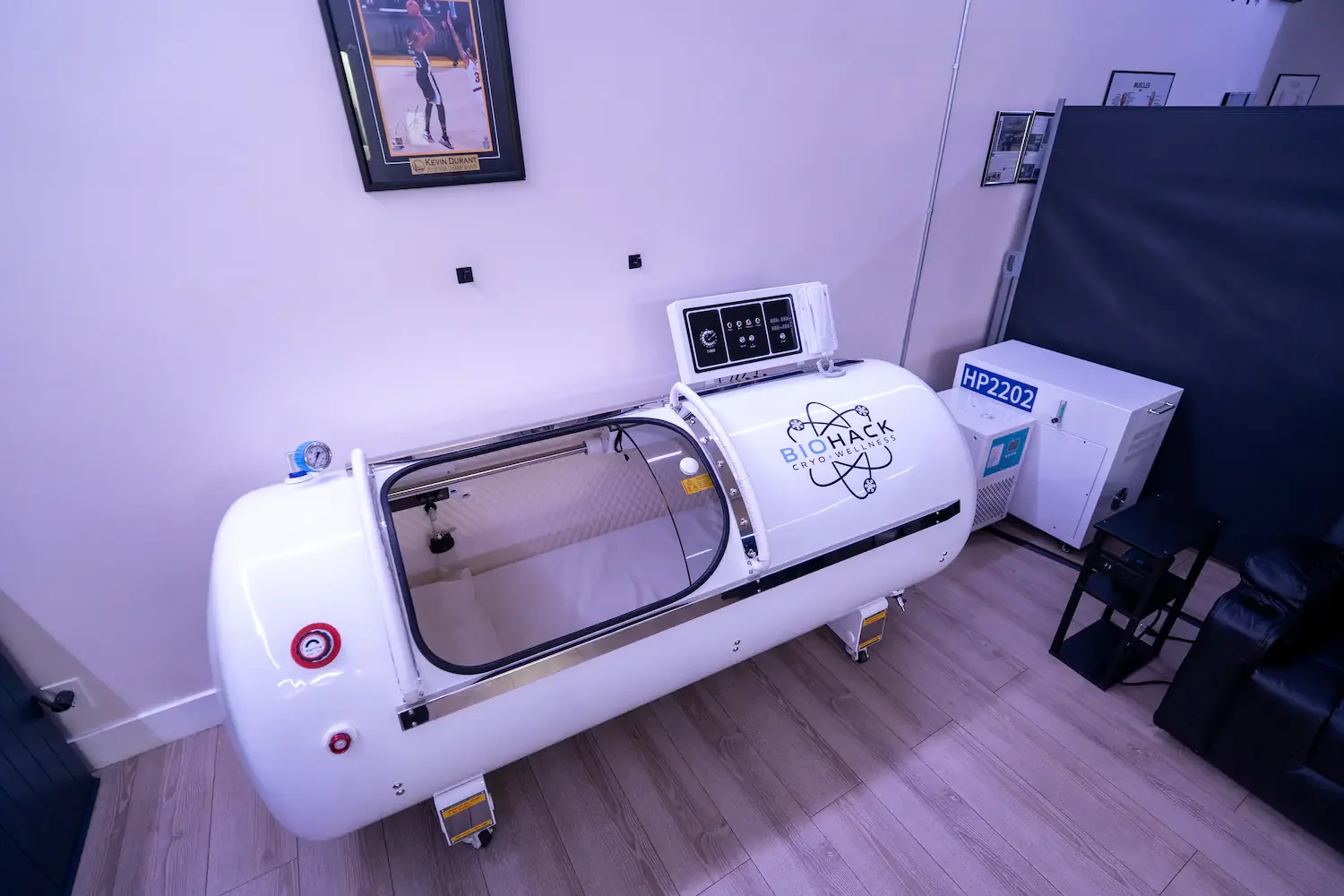
How HBOT Accelerates Physical Recovery
Recovery is fundamentally an oxygen problem. When you exercise intensely or sustain an injury, your body creates localized hypoxia — oxygen-depleted zones where normal circulation can't keep up with demand. Inflammation floods in, metabolic waste accumulates, and the clock slows on tissue repair.
HBOT intervenes at the source. By pressurizing the chamber to 1.5–3 atmospheres and delivering pure oxygen, the therapy dissolves oxygen directly into plasma — bypassing the capacity limits of red blood cells. Oxygen penetrates tissue that was previously unreachable, and the regenerative response begins.
The mechanisms are well established: reduction of pro-inflammatory cytokines (including IL-1β, IL-6, and TNF-α), accelerated neutrophil apoptosis to clear the inflammatory phase, and upregulation of growth factors that trigger tissue repair. Studies in athletic recovery contexts have documented reduced delayed onset muscle soreness (DOMS), faster lactate clearance, and shorter return-to-play timelines compared to passive recovery.
For Woodland Hills athletes — whether you're training at altitude, competing on the court, or simply trying to keep up with an aggressive training schedule — HBOT can be the difference between a two-day recovery and a five-day one.
HBOT and Longevity: What Emerging Research Suggests
This is where the conversation gets genuinely exciting — and where HBOT separates itself from almost every other recovery modality.
In 2020, researchers at Tel Aviv University published a landmark study examining the effects of repeated HBOT sessions on biological aging markers. The findings were striking: not only did HBOT sessions increase circulating stem cells by up to 37%, but subjects also showed measurable lengthening of telomeres — the protective caps on chromosomes that shorten as we age — in peripheral blood mononuclear cells. This was among the first studies to demonstrate that a non-pharmacological intervention could reverse hallmarks of cellular aging.
To be clear about the science: this research is in its early stages and was conducted in a specific clinical context. But the mechanisms are sound and the implications are real. HBOT appears to:
Activate cellular repair pathways that are otherwise dormant in well-oxygenated, non-stressed tissue
Stimulate mitochondrial biogenesis — the creation of new mitochondria, the cellular power plants that decline in number and function as we age
Mobilize bone marrow-derived stem cells that repair damaged tissue throughout the body
Reduce systemic oxidative stress, a key driver of accelerated biological aging
Longevity-focused clients throughout Calabasas and Thousand Oaks are already stacking HBOT with complementary therapies — Infrared Sauna and The Ammortal Chamber — to build a protocol that operates at the frontier of longevity medicine.
HBOT and Brain Health: Cognitive Function, Focus, and Neuroplasticity
The brain has an extraordinary appetite for oxygen, consuming roughly 20% of the body's supply. When cerebral oxygen delivery is suboptimal — due to stress, aging, poor sleep, head injury, or vascular changes — cognitive performance suffers in ways that can be subtle and cumulative.
HBOT addresses this directly. By dramatically elevating plasma oxygen concentration, it saturates brain tissue with oxygen that reaches regions where circulation has been compromised or sluggish. Research has identified several neurological mechanisms:
Neuroplasticity and repair: HBOT has been studied in the context of traumatic brain injury, post-stroke recovery, and post-COVID cognitive impairment (long COVID). Multiple studies have documented improvements in executive function, memory recall, processing speed, and mood outcomes. The proposed mechanism involves upregulation of brain-derived neurotrophic factor (BDNF) — the protein responsible for the growth and maintenance of neurons.
Neuroprotection: Elevated oxygen availability appears to reduce neuroinflammation, one of the underlying drivers of cognitive decline, depression, and neurodegeneration.
Cerebral angiogenesis: As with peripheral tissue, HBOT has been shown to stimulate new blood vessel formation in brain regions — improving the structural foundation for long-term cognitive health.
For professionals, creatives, and executives in the San Fernando Valley who depend on sustained cognitive performance, HBOT offers a science-grounded path to mental clarity that no supplement stack can replicate.
HBOT for Athletes: Performance and Faster Return-to-Play
Elite sports teams have quietly incorporated HBOT into recovery protocols for years — and for good reason. The research supporting its use in athletic contexts is among the most practical and consistent in the literature.
Soft tissue injuries — sprains, strains, muscle tears — heal faster under HBOT conditions because the therapy delivers oxygen to the hypoxic core of injured tissue, where conventional circulation cannot reach. This accelerates the transition from the inflammatory phase to the proliferative (rebuilding) phase of healing.
Concussion and head injury recovery is an area of growing research. Studies examining athletes and veterans with mild traumatic brain injury have documented cognitive and symptomatic improvements following HBOT protocols, supporting its emerging role in post-concussion care.
Pre-competition priming and post-competition recovery are increasingly common applications. Athletes use HBOT sessions in the days surrounding competition to ensure muscles are fully oxygenated, inflammation is controlled, and neural function is sharp. Book a session around your training schedule to experience this yourself.
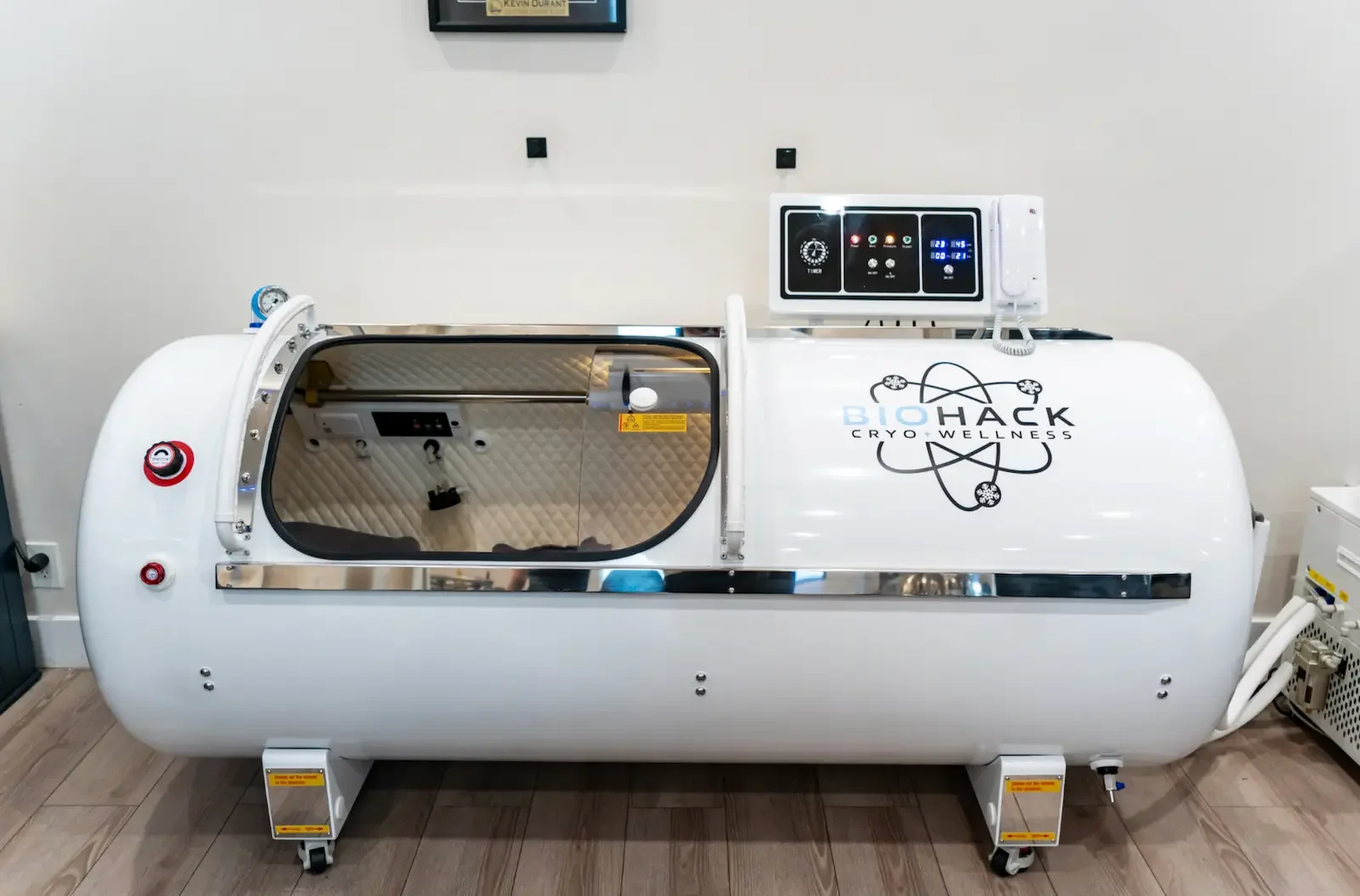
Complementary Therapies at Biohack That Multiply Results
Recovery science increasingly points to the value of stacking modalities — combining therapies that work through different but complementary mechanisms. At Biohack Cryo & Wellness in Woodland Hills, clients pair HBOT with:
Cold Plunge: Cold immersion drives vasoconstriction and anti-inflammatory response through different pathways than HBOT, creating a powerful combined effect on inflammation and recovery speed.
Infrared Sauna: Infrared heat penetrates deep tissue to promote circulation, detoxification, and relaxation — pairing beautifully with the oxygenation work of HBOT.
The Ammortal Chamber: Biohack's exclusive multi-modality chamber combines PEMF, red light, molecular hydrogen, vibroacoustic therapy, and breathwork — making it the ideal complement or alternative to HBOT for clients targeting longevity and cellular health.
Why Woodland Hills Residents Are Choosing HBOT Now
The conversation around HBOT has shifted. What was once a niche clinical intervention is now discussed in longevity podcasts, sports medicine circles, and biohacking communities from Thousand Oaks to Malibu. The demand isn't driven by hype — it's driven by results that clients in Woodland Hills and across the San Fernando Valley are experiencing firsthand.
The key is access to a properly equipped facility with trained practitioners who can guide protocols for individual goals. Biohack Cryo & Wellness fills that gap in the San Fernando Valley — bringing commercial-grade HBOT, practitioner-led care, and a ⭐⭐⭐⭐⭐ track record to a community that previously had to travel to Los Angeles or beyond for this quality of care.
Explore memberships and packages designed to make regular HBOT sessions an accessible, affordable part of your health protocol.
Frequently Asked Questions About HBOT Research and Safety
Is there solid research behind HBOT for brain health? Yes. Multiple peer-reviewed studies have examined HBOT in the context of traumatic brain injury, post-stroke recovery, and cognitive aging. While research is ongoing, the evidence consistently points to improvements in neuroplasticity, cognitive function, and cerebral circulation with repeated HBOT sessions.
Is HBOT scientifically proven for longevity? The most cited longevity research involves a 2020 Tel Aviv University study showing telomere lengthening and increased stem cell mobilization following HBOT. This is compelling early evidence that HBOT influences biological aging mechanisms, though research is continuing.
What are the safety risks of HBOT? HBOT has a well-established safety profile. The most commonly reported effects are mild ear pressure during pressurization and occasional lightheadedness. Rare risks (such as oxygen toxicity) are associated with significantly higher pressures than used in wellness settings. Biohack's practitioners screen clients before every session.
How many sessions does the research suggest for cognitive benefits? Clinical studies examining cognitive outcomes have typically used protocols of 40–60 sessions. For wellness clients in Woodland Hills, meaningful benefits — including improved clarity, energy, and focus — are often reported beginning around 10 sessions. Your practitioner will help design a protocol aligned with your specific goals.
Can HBOT be combined with other biohacking therapies? Absolutely — and it's often recommended. HBOT stacks effectively with cold therapy, infrared sauna, and technologies like the Ammortal Chamber. Many Biohack clients build multi-modality protocols for compounding results.
Who should avoid HBOT? Contraindications include untreated pneumothorax, certain medications, and some ear or sinus conditions. A thorough intake screening with Biohack's practitioners will confirm whether HBOT is right for you before your first session.
Ready to experience HBOT for recovery, longevity, and brain health in Woodland Hills?
Biohack Cryo & Wellness is Woodland Hills' only practitioner-led studio with the exclusive Ammortal Chamber — and a science-first approach to every session.
👉 Book your session today — or explore our memberships to build a consistent protocol that compounds over time.
📍 Located in Woodland Hills, CA | Serving Calabasas, Malibu, Thousand Oaks & the San Fernando Valley